Editorial Note: This photo essay was first compiled by a team of students—Tan Teenli, Merlin Cheng, Ellery Lim, Ng Danling, and Jake Tan Ghim Yeow—who were attached to Nan Shan Hai Temple between 2016 and 2017. It has since been revised and edited, with a conclusion added by the editor. Lim Yin Ru kindly vetted the Chinese translation and revised the photo essay for flow.
Introduction
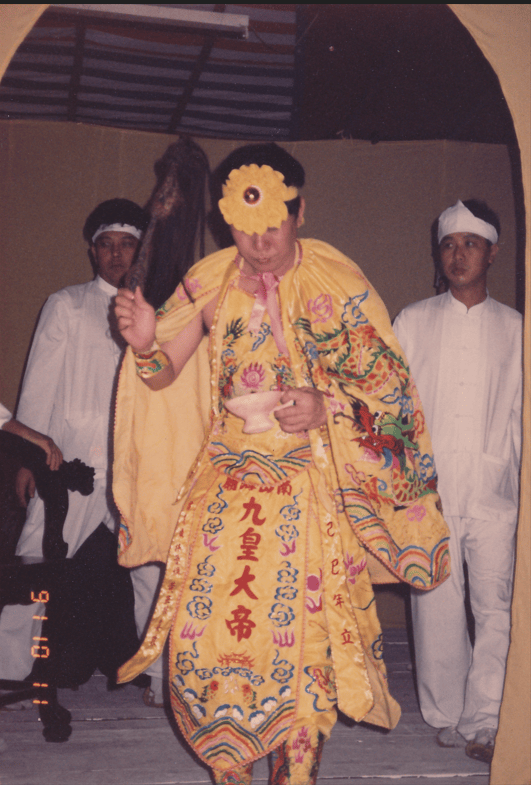
At the age of 21, Goh Cheng Hoe was instructed by the netherworld deities Great Uncle and Second Uncle 大二爷伯 [Minnan: Tua Li Ya Peh] to host the Nine Emperor Gods Festival for as long as he lived. Gathering his friends and devotees, Mr Goh began organising the Festival that very year, receiving detailed instructions from the deities on how to do so. Celebrations of the Nine Emperor Gods Festival continued annually at Nan Shan Hai Temple, which Mr Goh had founded, until his death. Mr Goh fulfilled his promise to Tua Li Ya Peh. Since his passing, his daughter, Anna Goh, has continued to organise the festival every year to preserve the tradition and her father’s legacy.
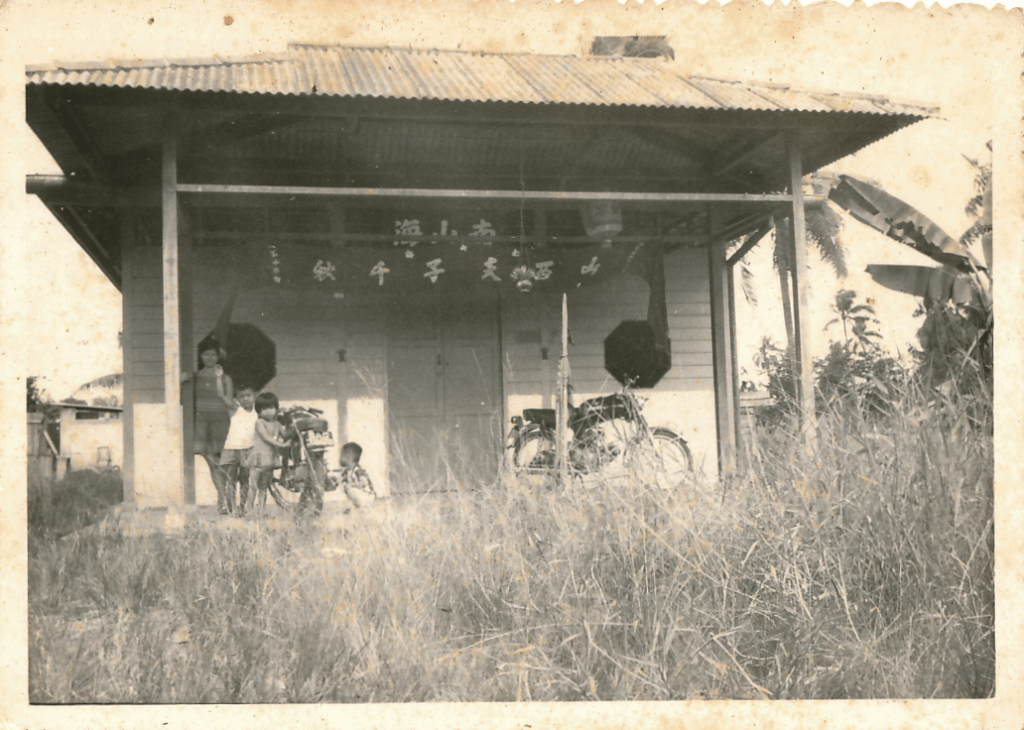
The Nan Shan Hai Miao of Yesteryears
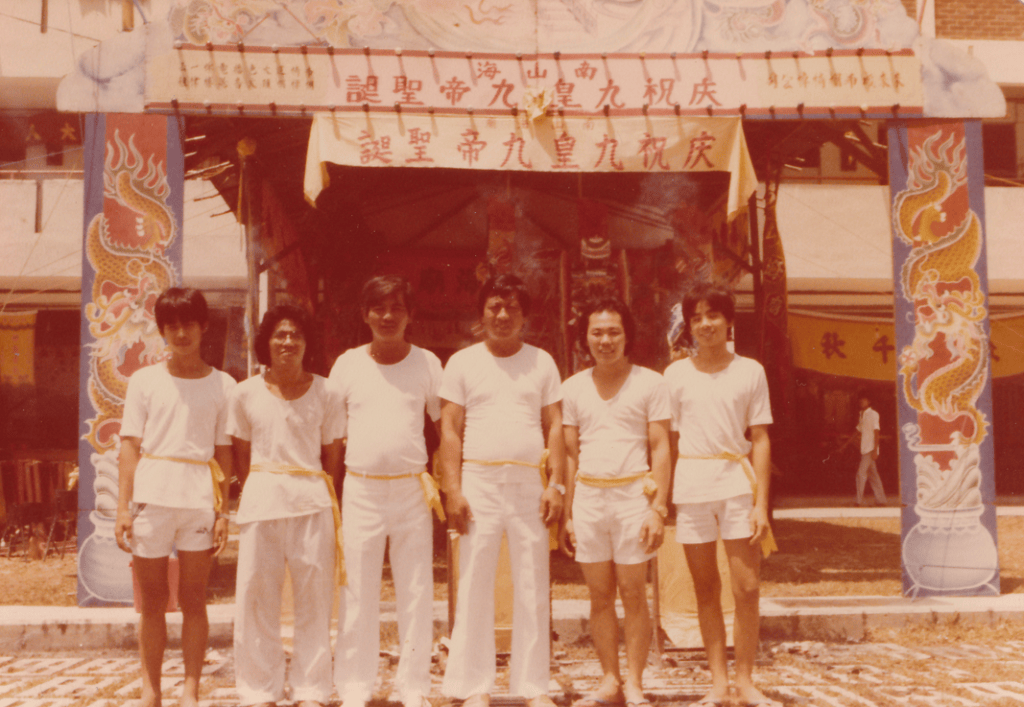
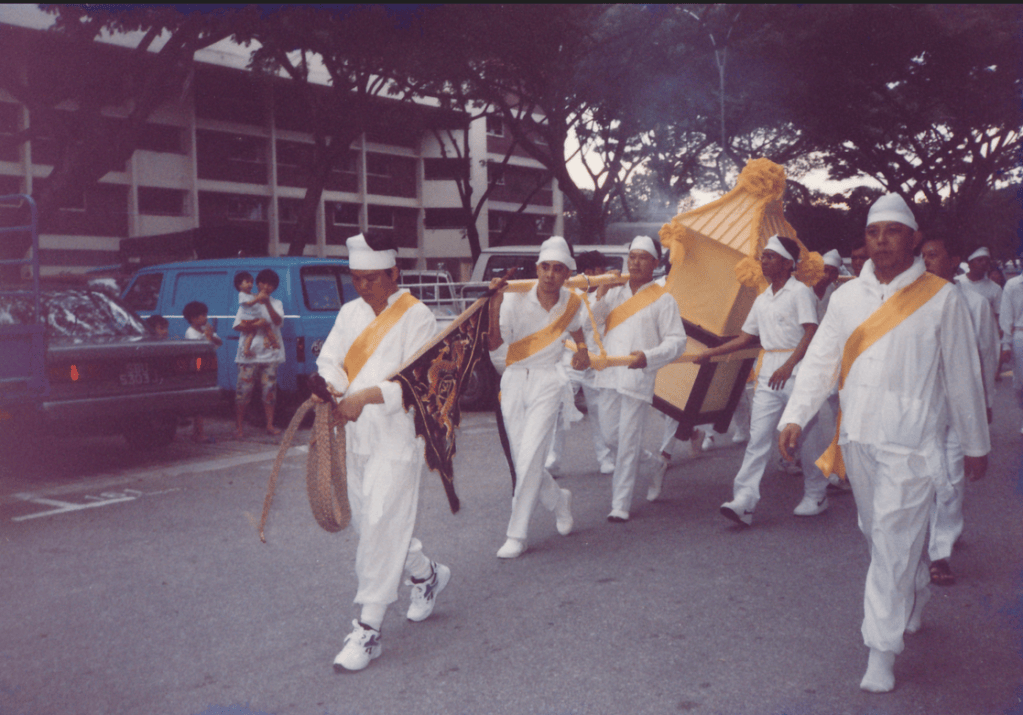
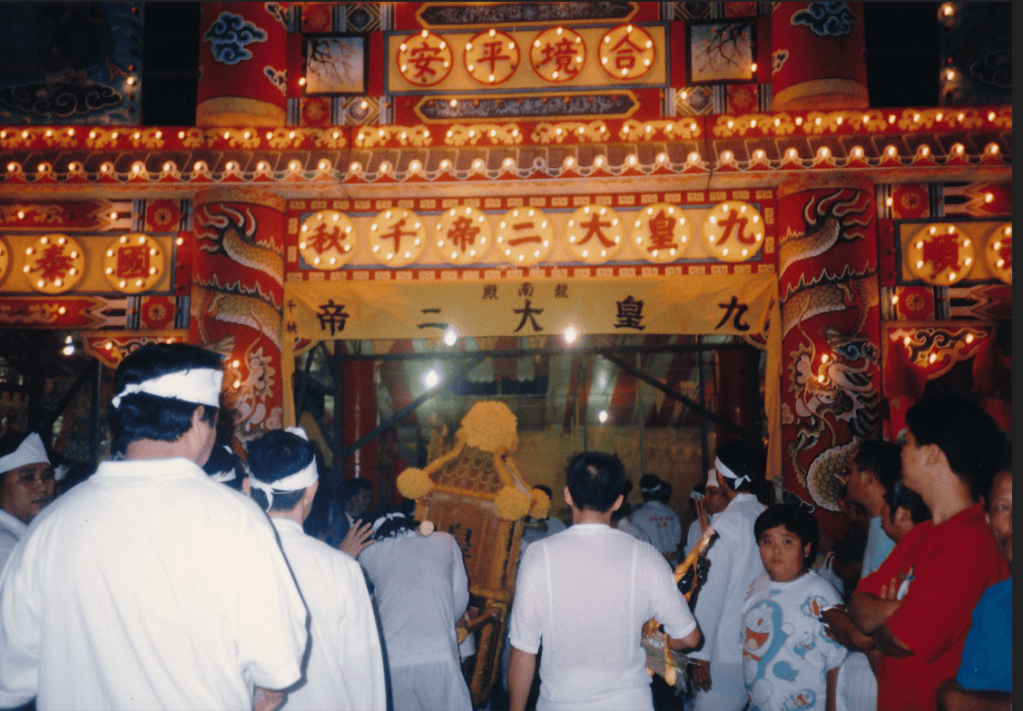
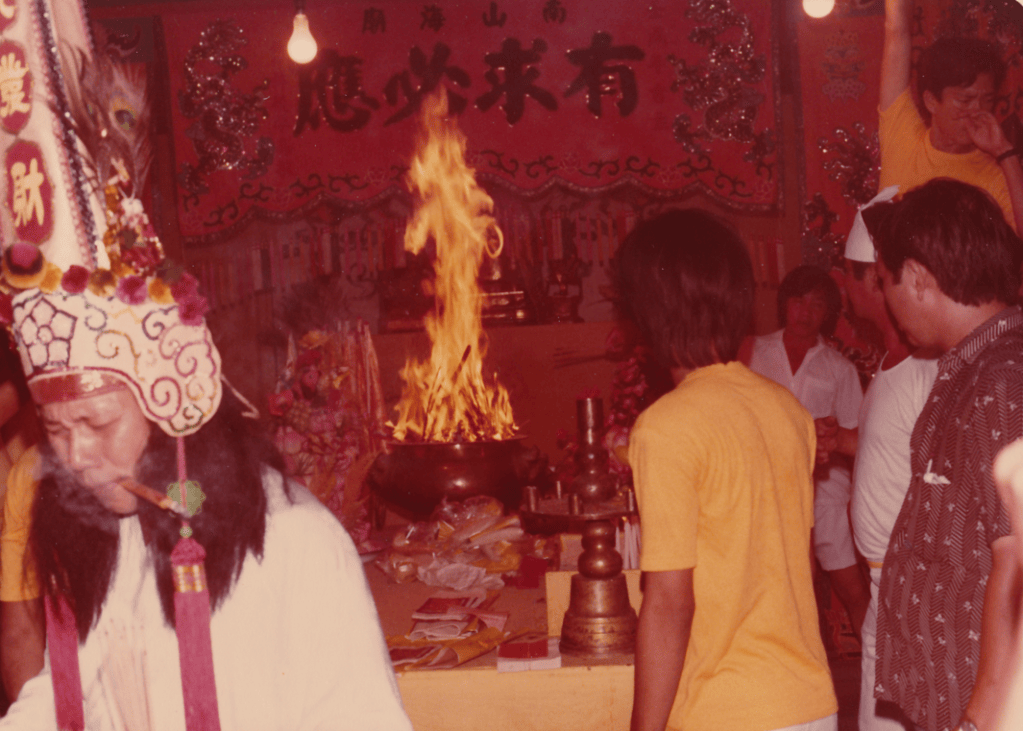
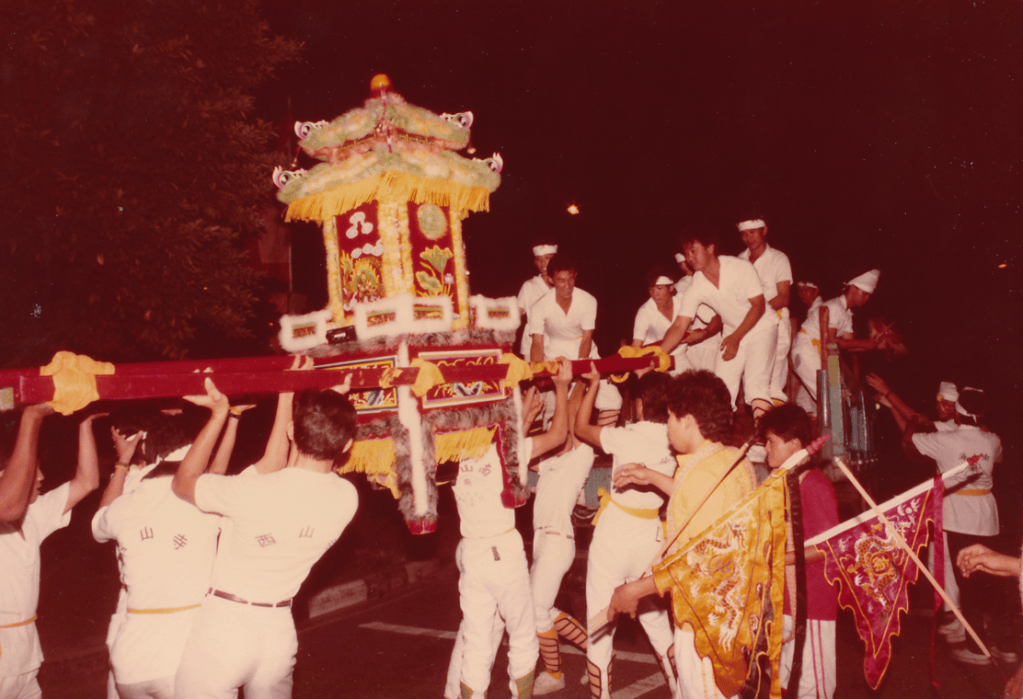
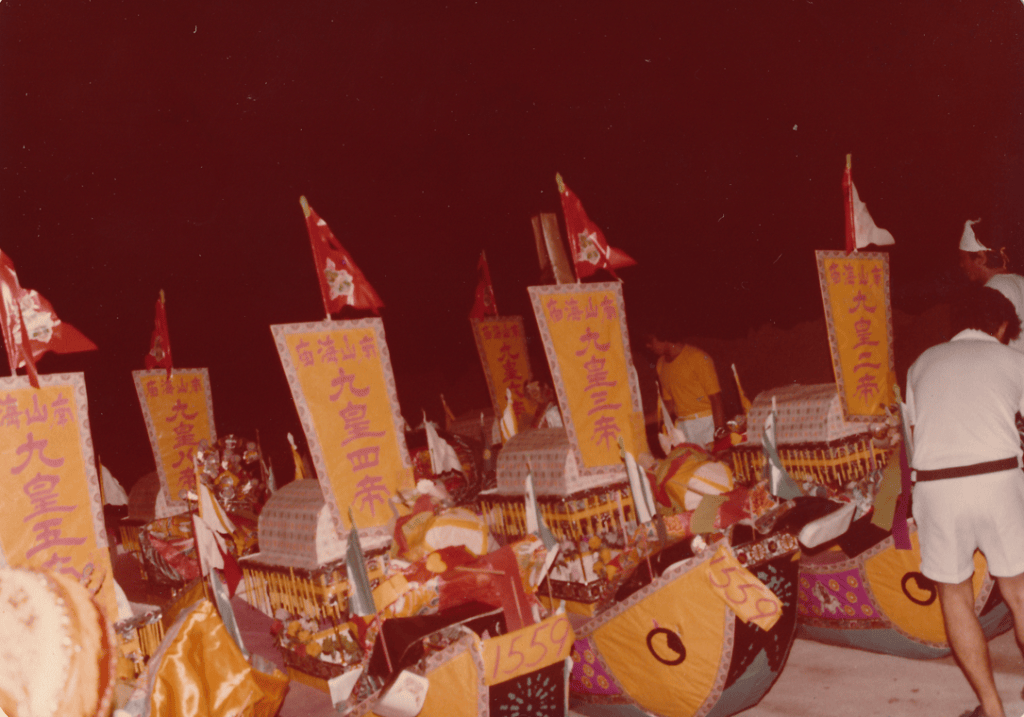
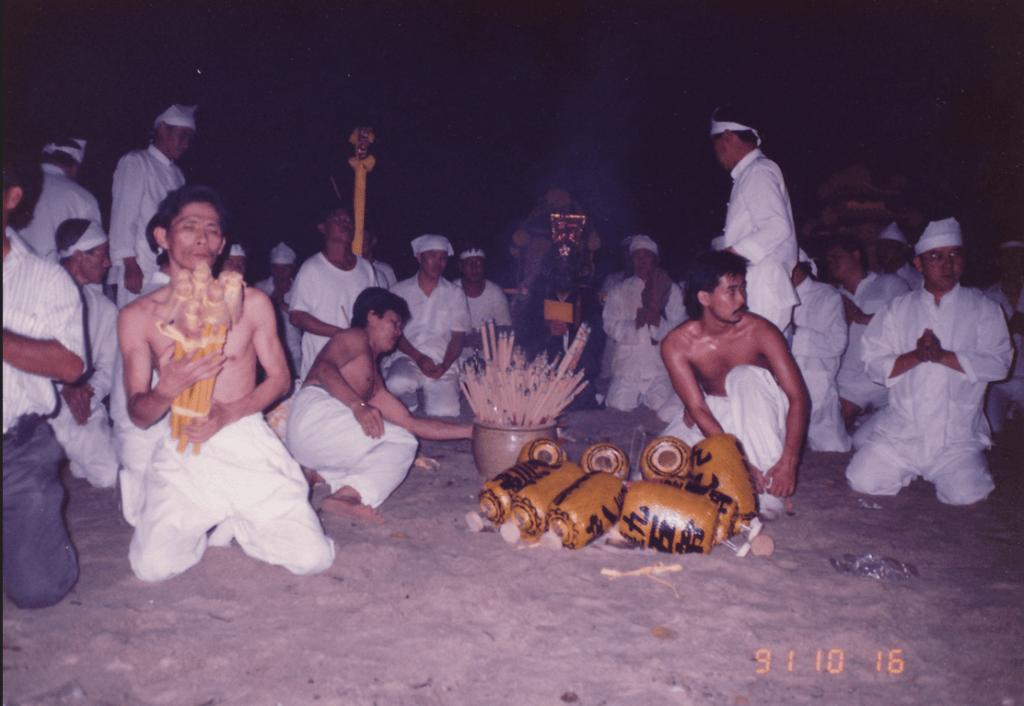
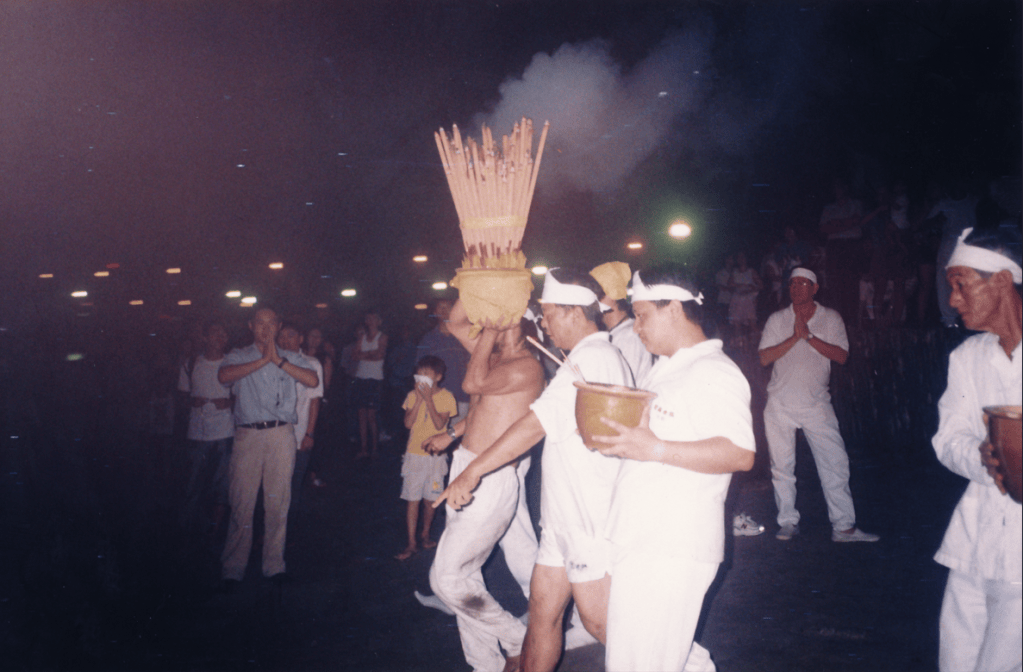
The festival was first observed at the original location of Nan Shan Hai Temple at Jalan Tau Geh (off Jalan Ang Teng), until the land on which the village, or kampong, was situated was acquired and the temple moved with Mr Goh’s family to a Housing and Development Board (HDB) flat at 701 Bedok Reservoir Road. In the village, temple helpers and devotees would go to East Coast Park to invite and send off the Nine Emperor Gods. The festivities were simpler than those held at Bedok Reservoir today. On the sixth day, they would put up a long table for devotees and helpers to present their offerings to the Nine Emperor Gods. In certain years, on the instruction of Tua Li Ya Peh, the temple also held a firewalking ritual for improving one’s luck. On two occasions, the temple organised a tour of the kampong by the Nine Emperor Gods to bless the inhabitants. On both occasions, the temple also visited Ampang Lam Thian Kiong 安邦南天宫.
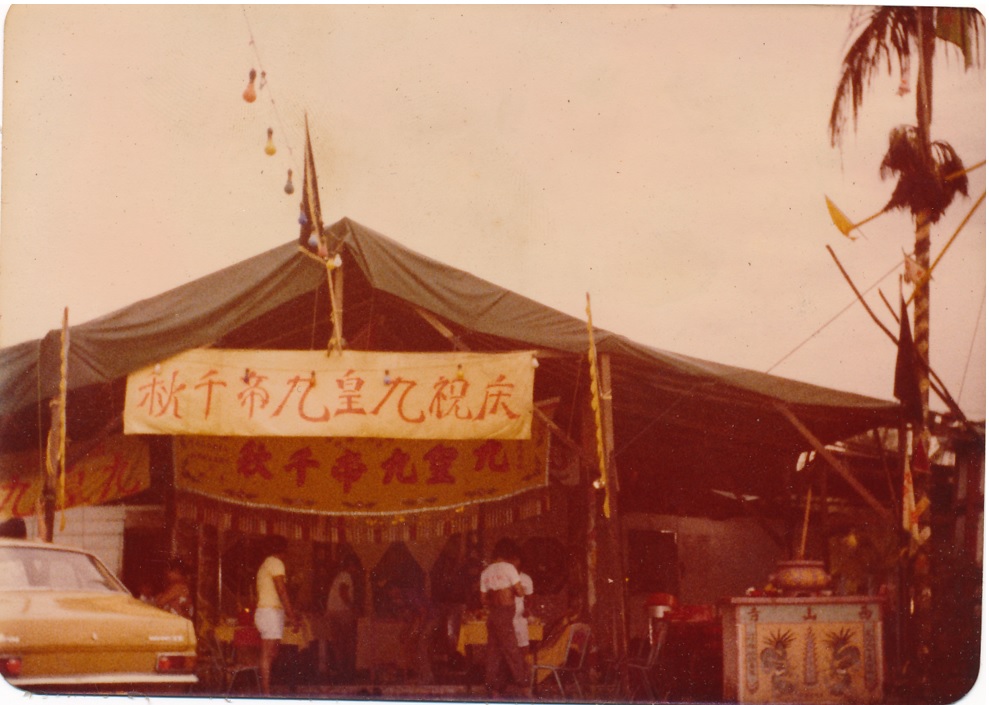
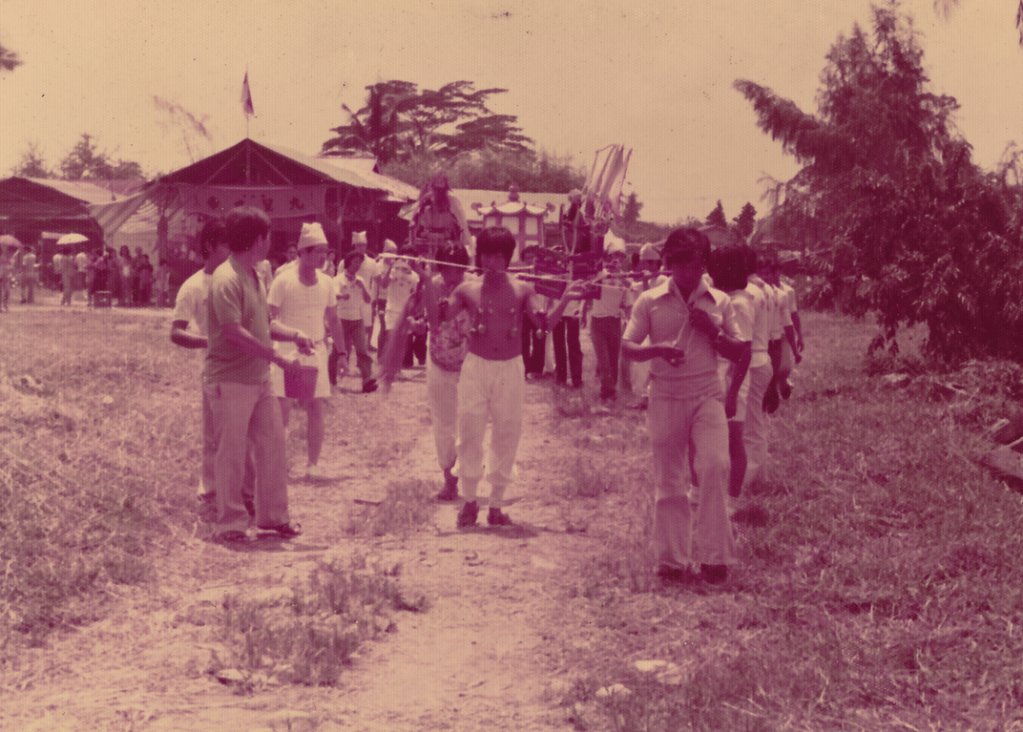
After moving to Bedok Reservoir, the festival was initially held for a few years at the void deck of Block 702, next to the car park, until the basketball court next to Block 701, where the festival is now held, was completed.
The Festival Today
The Nine Emperor Gods Festival is held during the first nine days of the ninth lunar month of the Chinese calendar. According to a temple elder, Tua Ya Peh told them during one of his visits that the Nine Emperor Gods were nine beggars who had helped to fight pirates who ravaged coastal communities. They were killed by the pirates and their bodies thrown into the sea. They were later adopted as godchildren by Dou Mu Niang Niang and propitiated by the inhabitants of these coastal areas in memory of their good deeds and out of respect for their efforts in fighting the pirates. Hence, even today, the temple does not chase away beggars who enter the festival area.
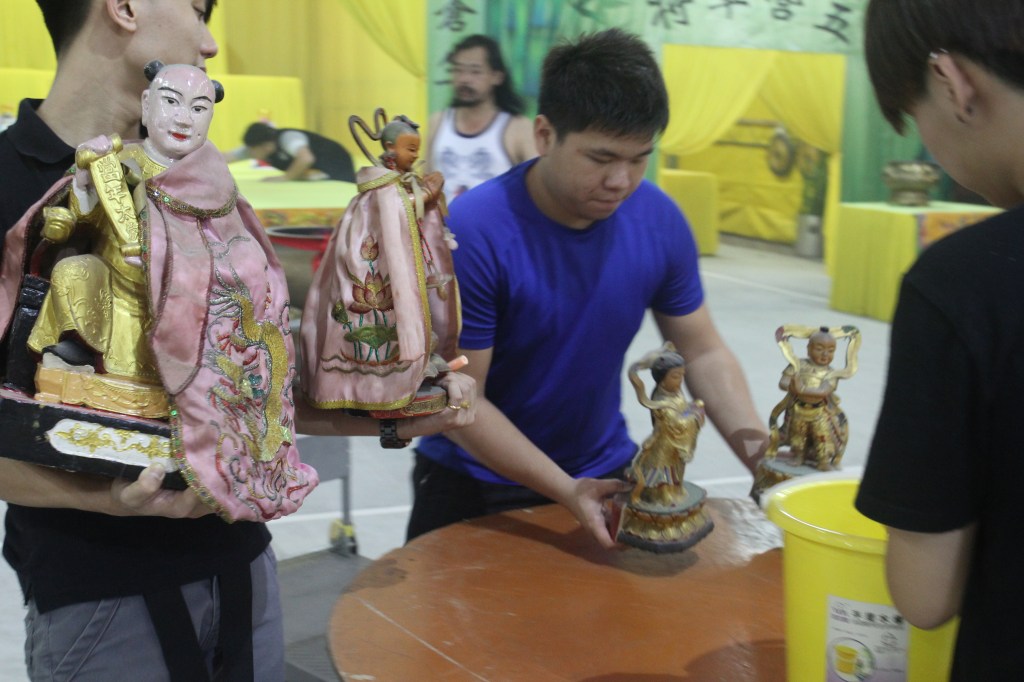
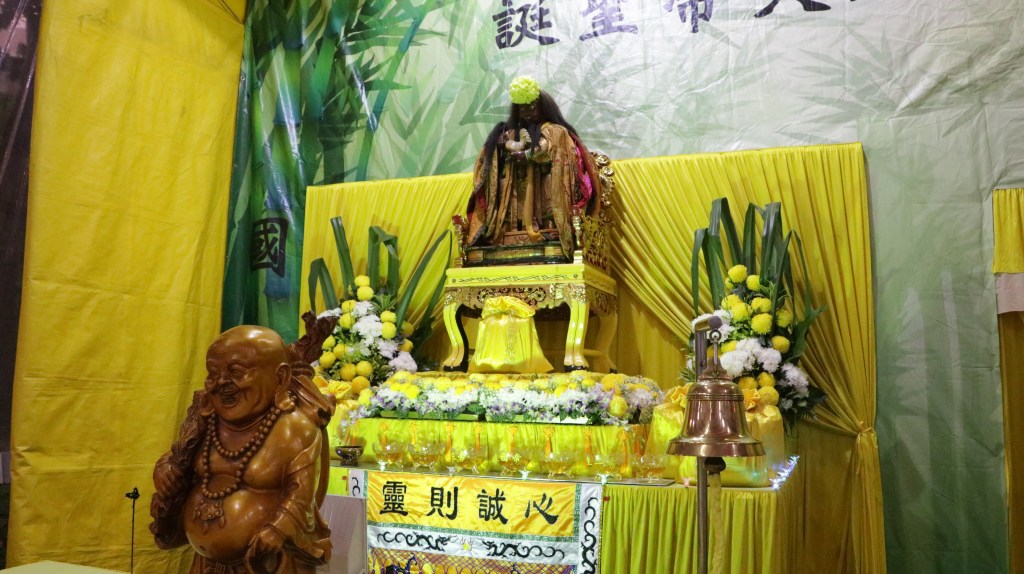
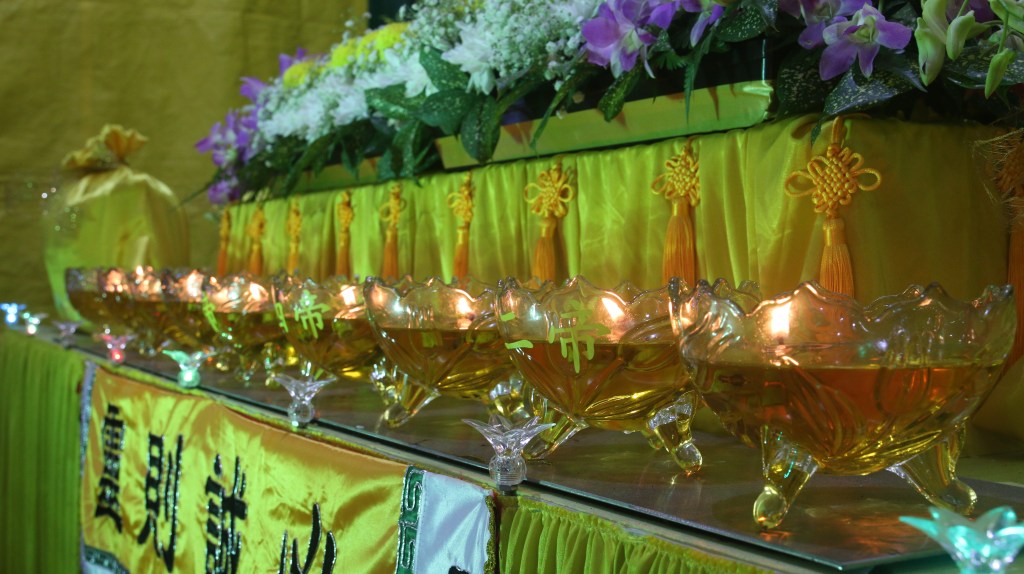
Today, the Nan Shan Hai Nine Emperor Gods Festival continues to be held on the basketball court and field next to Block 701, Bedok Reservoir Road. Preparations for the Festival begin weeks ahead of the actual festivities. Logistical arrangements are made for paper offerings, a makeshift kitchen in the void deck, and manpower for different roles during the festival. A month before the start of the festival, temple committee members attending to the Inner Palace 内殿, which houses the Nine Emperor Gods and Dou Mu Yuan Jun during the Festival, begin a strict vegan diet that also prohibits garlic and onion.
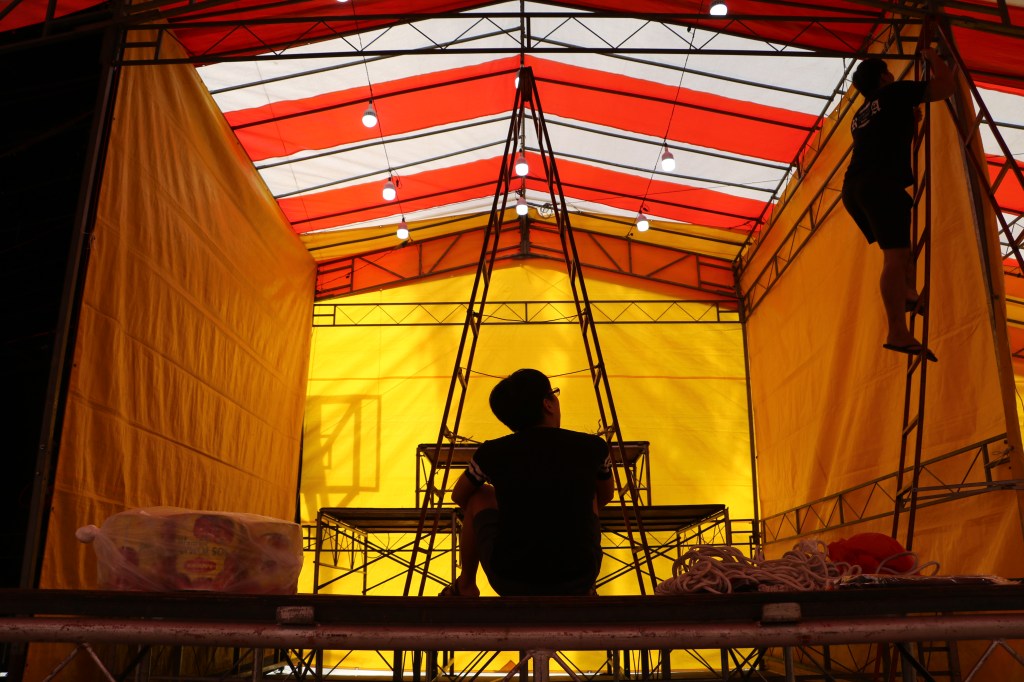
A few days before the receiving of the Nine Emperor Gods, a tentage is set up on the basketball court. Volunteers and temple committee members work tirelessly over the following days to set up the altars and equipment within the tentage and prepare the space for the festival. Deity images are then invited from the temple to the festival area and cleaned. Festival flags are hoisted within the festival area and erected along the surrounding roads, while celebratory banners are unfurled. For many volunteers and committee members, this is also a time of reunion, as they may not have seen each other for a year and there is much catching up to do.
Once everything is in place, a consecration ritual is performed, in which joss sticks and paper money are offered at the centre and four corners of the tentage, representing the five directions. Flags are put up and the holy whip is used at these spots to purify and spiritually secure the festival area. The stage is now ready for the arrival of the Nine Emperor Gods.
Receiving the Nine Emperor Gods
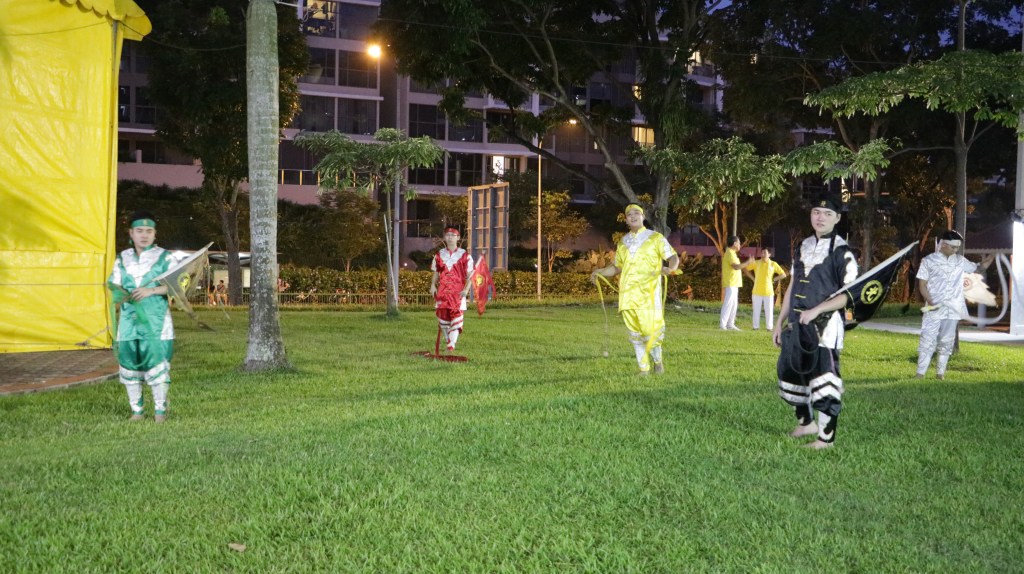
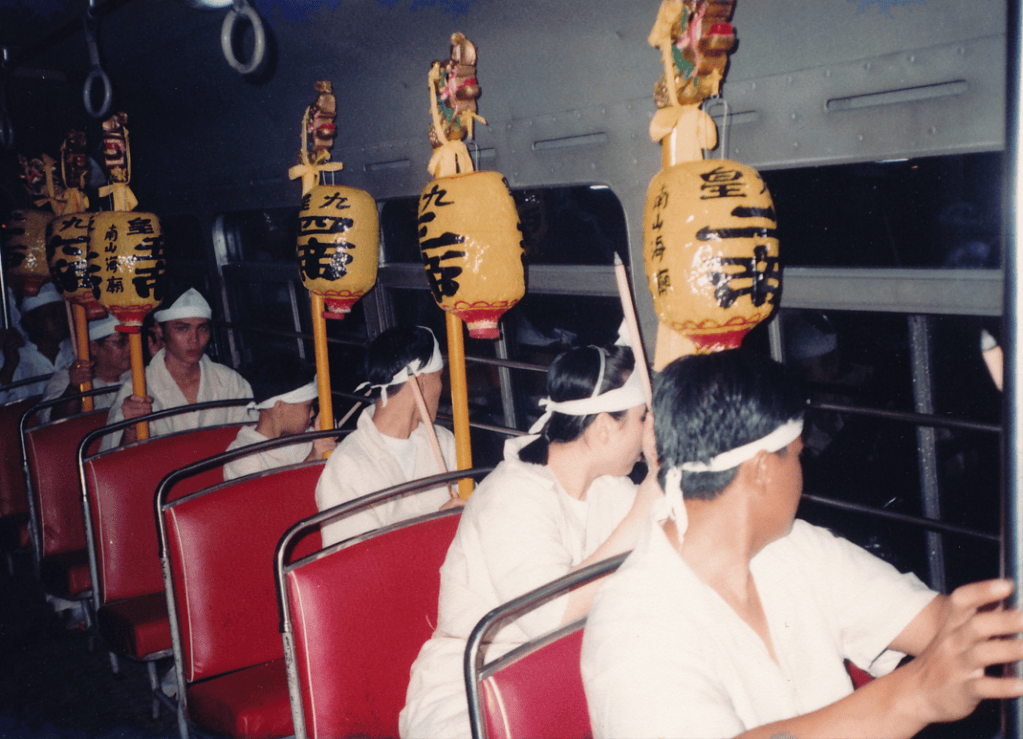
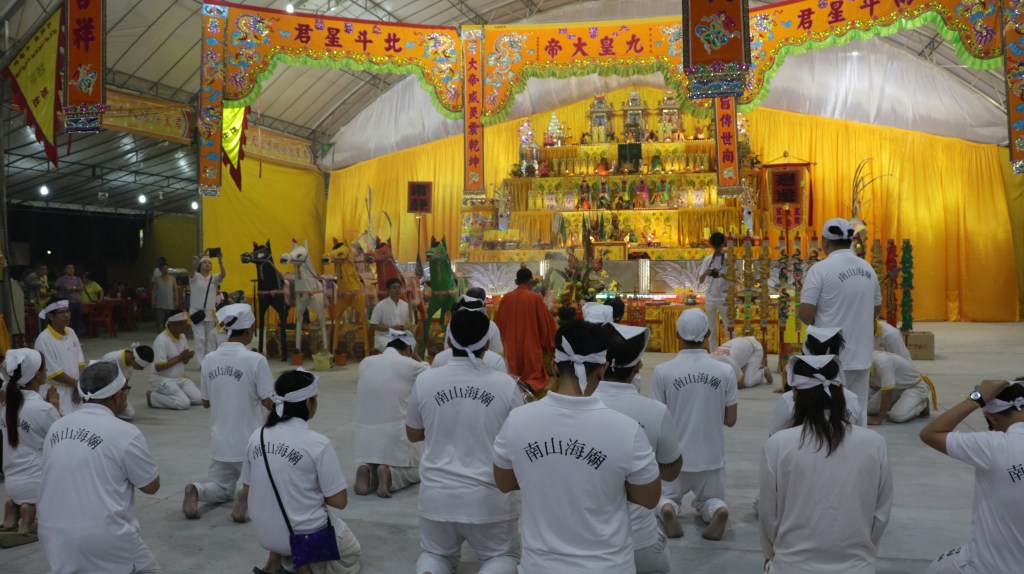
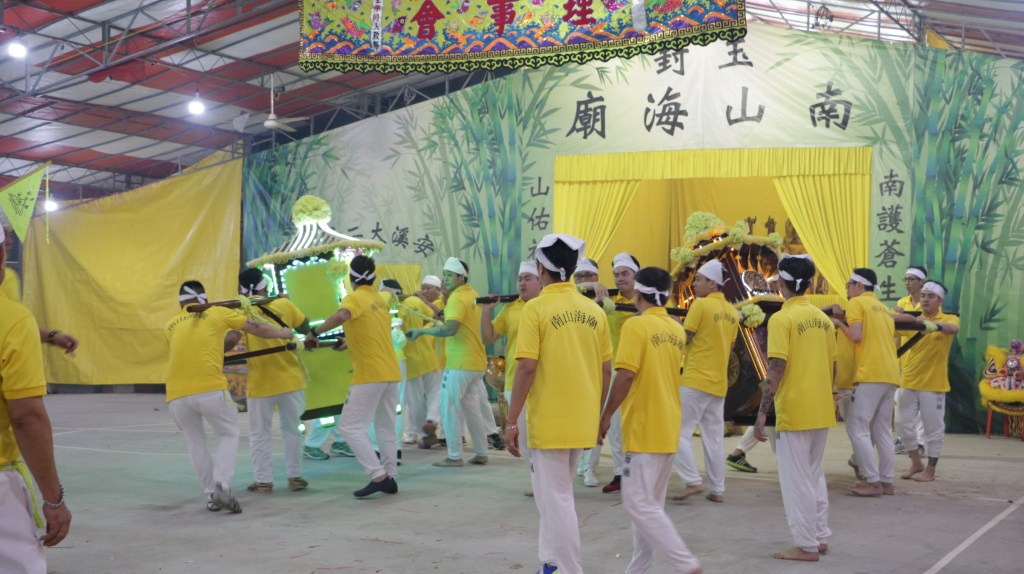
Towards the end of the eighth lunar month, devotees, volunteers, and committee members decked out in white begin to gather for the receiving of the Nine Emperor Gods, which marks the beginning of the festival. In the late afternoon, the lion and dragon dance troupes arrive to pay their respects and perform for the gathering crowd as the temple prepares for the receiving. The five vanguards of the receiving contingent change into their uniforms and pay respects at the different altars. The Daoist priest leads the committee members in prayers, and the palanquins are carried into the Dou Mu’s Palace in preparation for the departure to the beach to receive the Nine Emperor Gods. When all are ready, the contingent boards the lorries to begin their journey to the beach. Buses are chartered for the occasion to bring the devotees there.
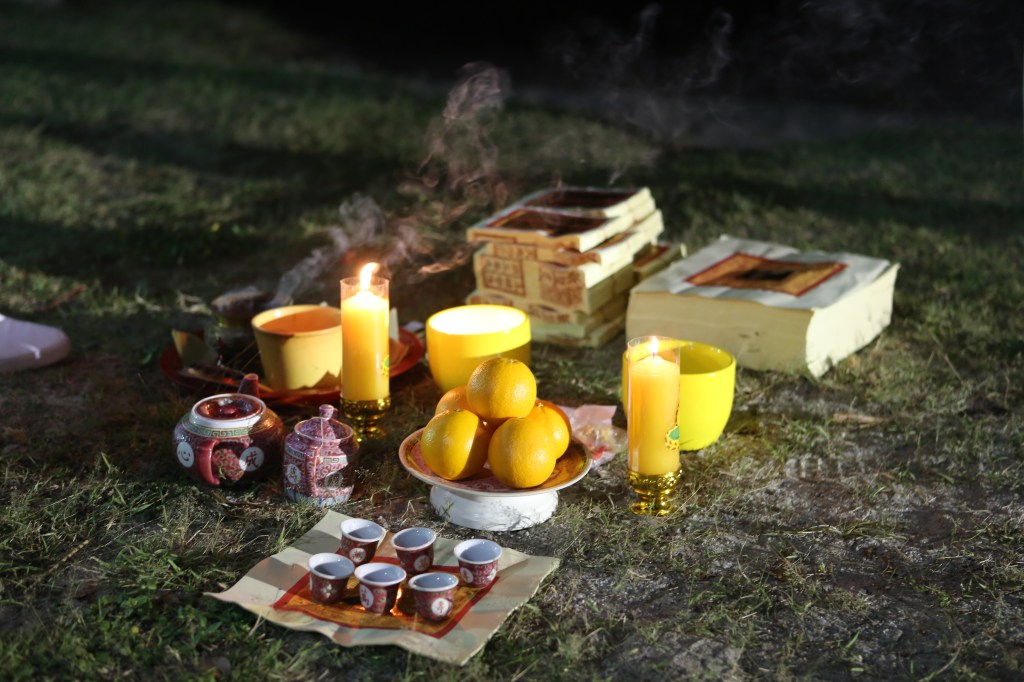
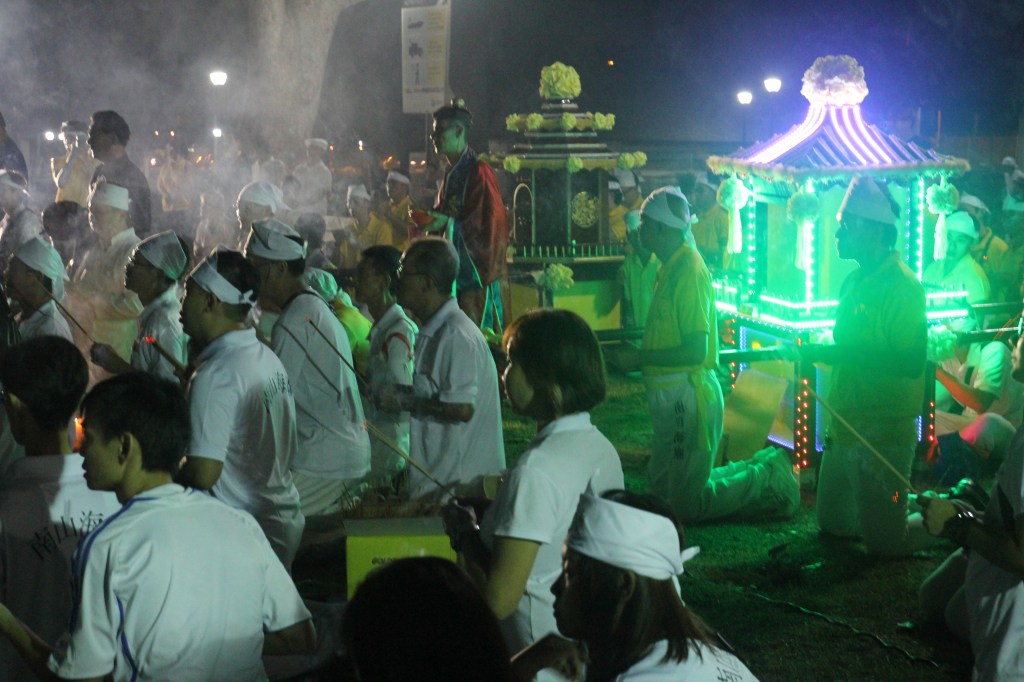
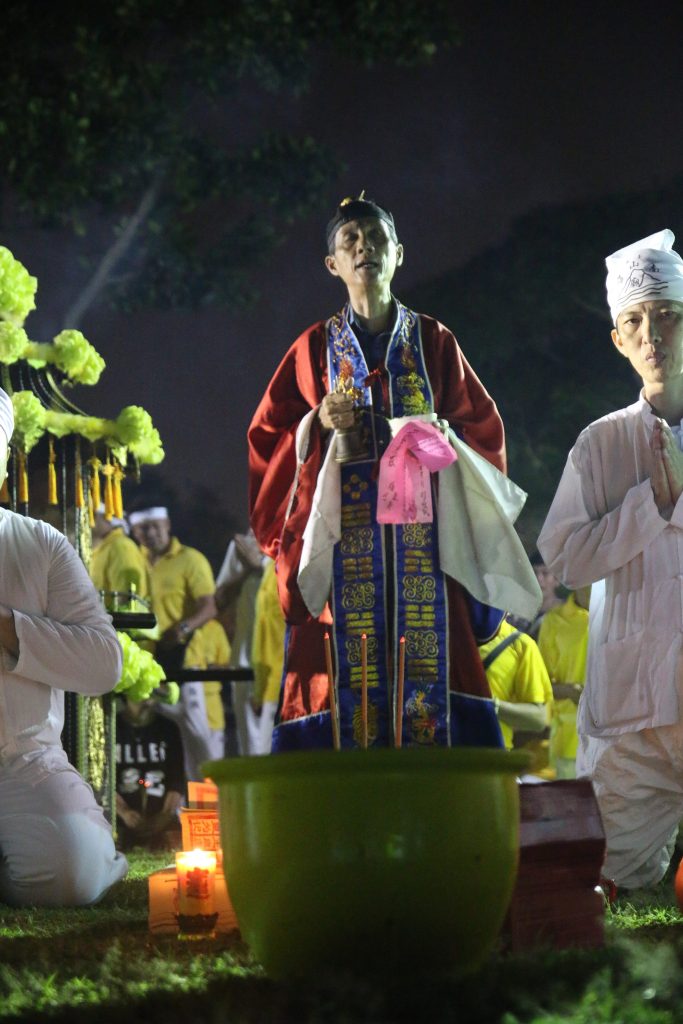
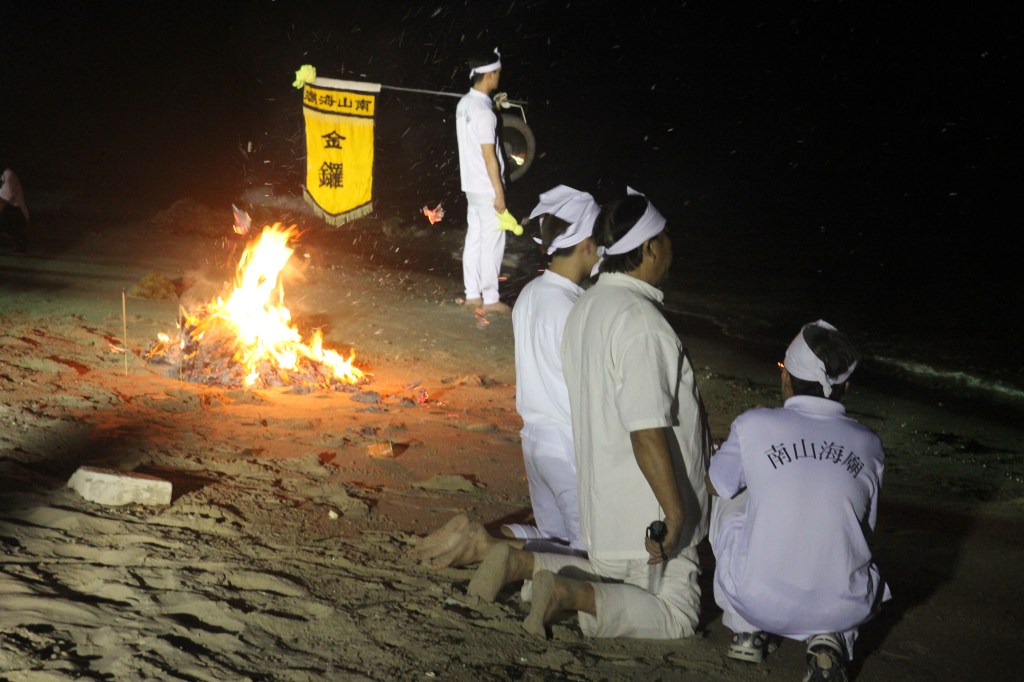
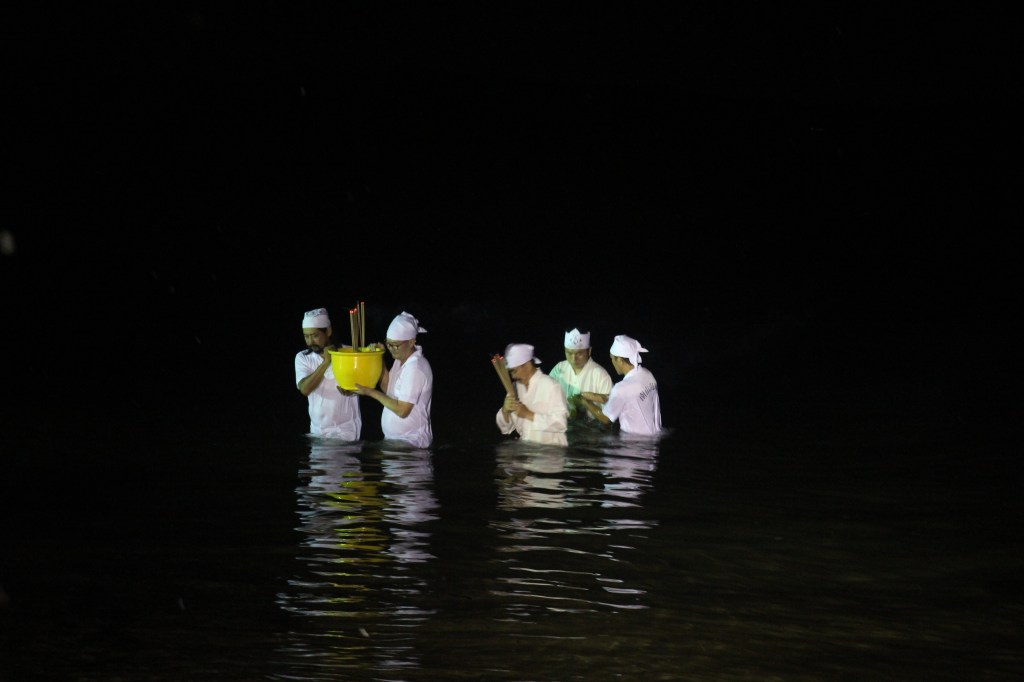
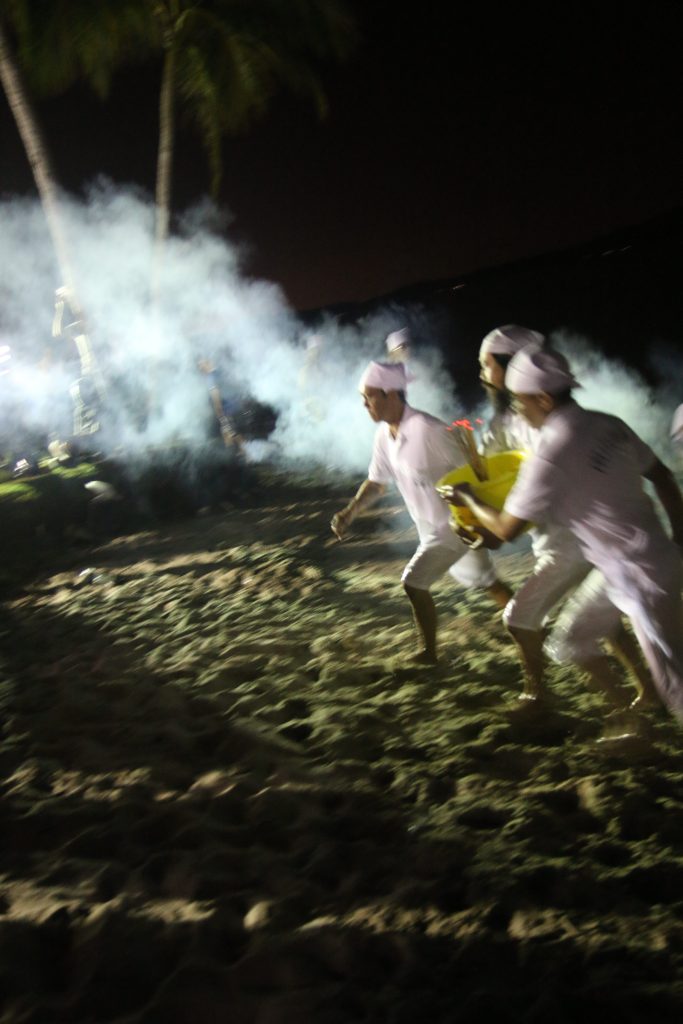
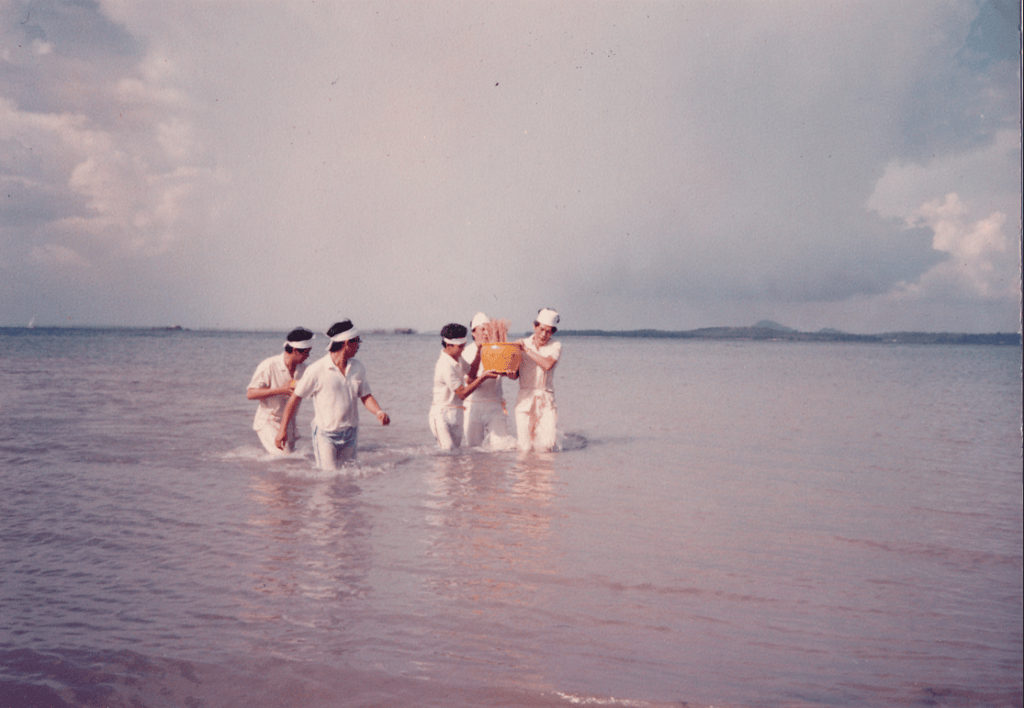
By the time the contingent arrives at Changi Beach, night has fallen. A mat is laid out on the grass area next to the beach, and the main offerings and ritual paraphernalia for the receiving ritual are placed on it. These include a plate of fruit, joss paper, six teacups placed in two rows of three and two teapots, as well as two yellow candles and a large round yellow vessel. After the arrival of the palanquin, the incense censer representing the Nine Emperor Gods is invited from the palanquin and placed in front of the candles and offerings, facing the sea. The rituals for receiving the Nine Emperor Gods are then led by the Daoist priest. The priest chants the scriptures for the receiving and reads the petition, while giving instructions for the offering of incense sticks and joss paper, and for when devotees should kneel and arise during the ritual. At a designated moment indicated by the Daoist priest, the large censer from the palanquin is carried by designated committee members, together with the large yellow vessel, into the sea to invite the deities. The censer is then carried back to shore and returned to the palanquin. The entourage then begins the journey back to the festival area.
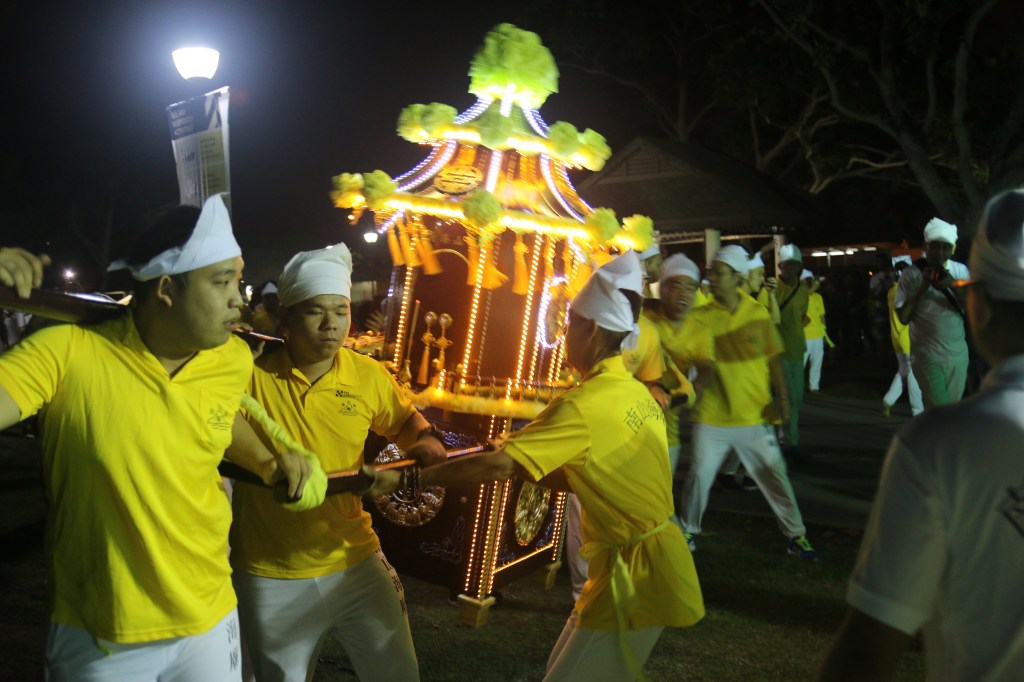
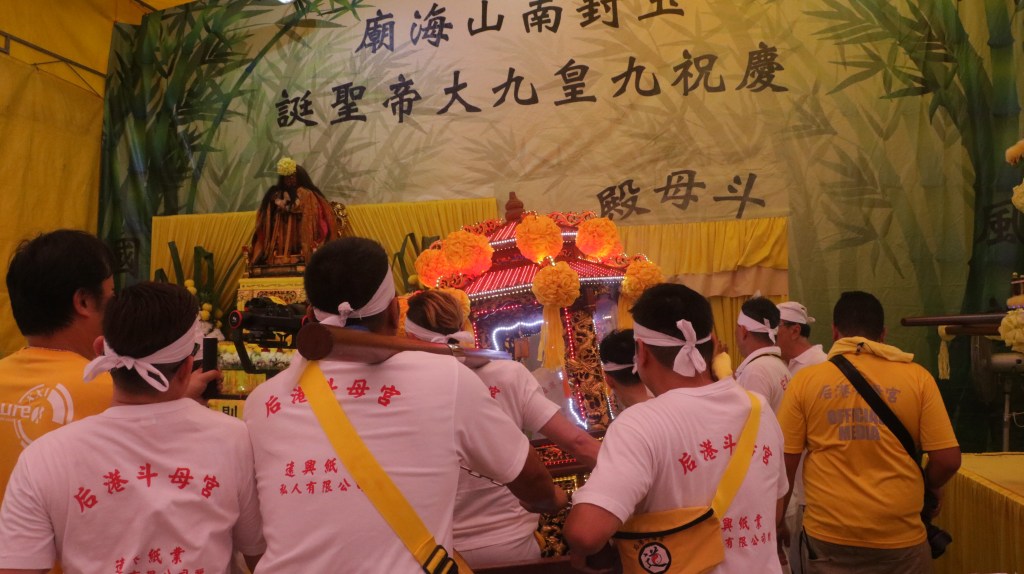
Upon returning to the festival area, the palanquins make a few rounds of the main compound and the grass field next to it, signifying the return of the Nine Emperor Gods for the festival. They are then brought into the Inner Palace for the sacred objects to be transferred to the altars within, before the palanquins are brought out to their resting stations for the festival. The Daoist priest then leads the committee members in paying respects at the different altars, starting with the Nine Emperor Gods altar and then the altar for the other deities. He then consecrates the horses representing the five spiritual armies and their generals. The lion and dragon dance troupes also perform for the crowd of devotees, bringing the evening festivities welcoming the Nine Emperor Gods to an end.
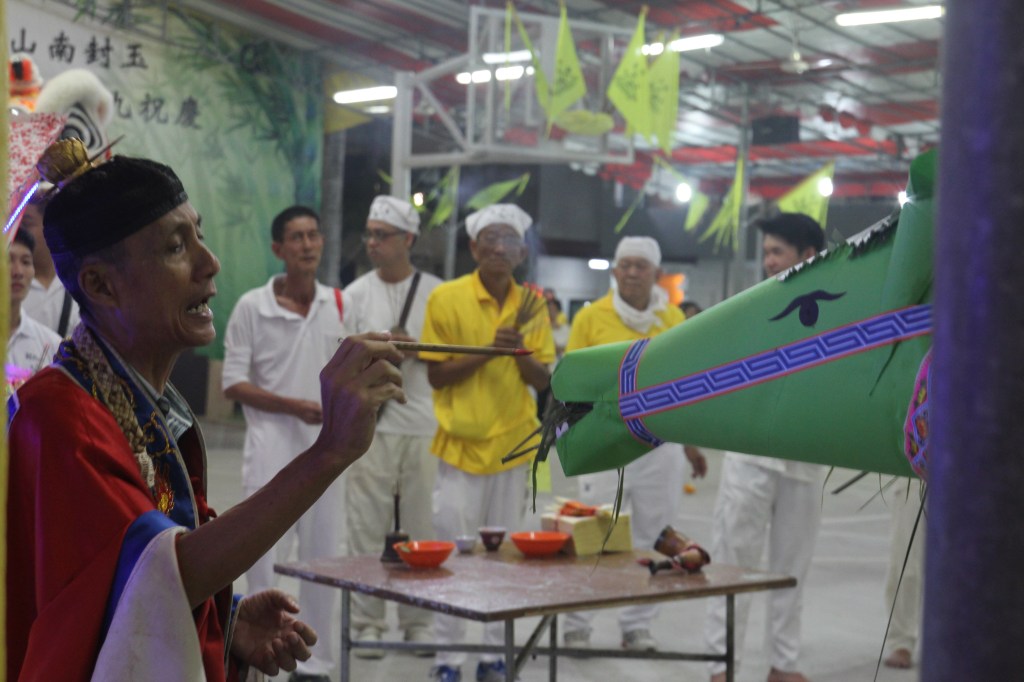
Procession [Yew Keng]
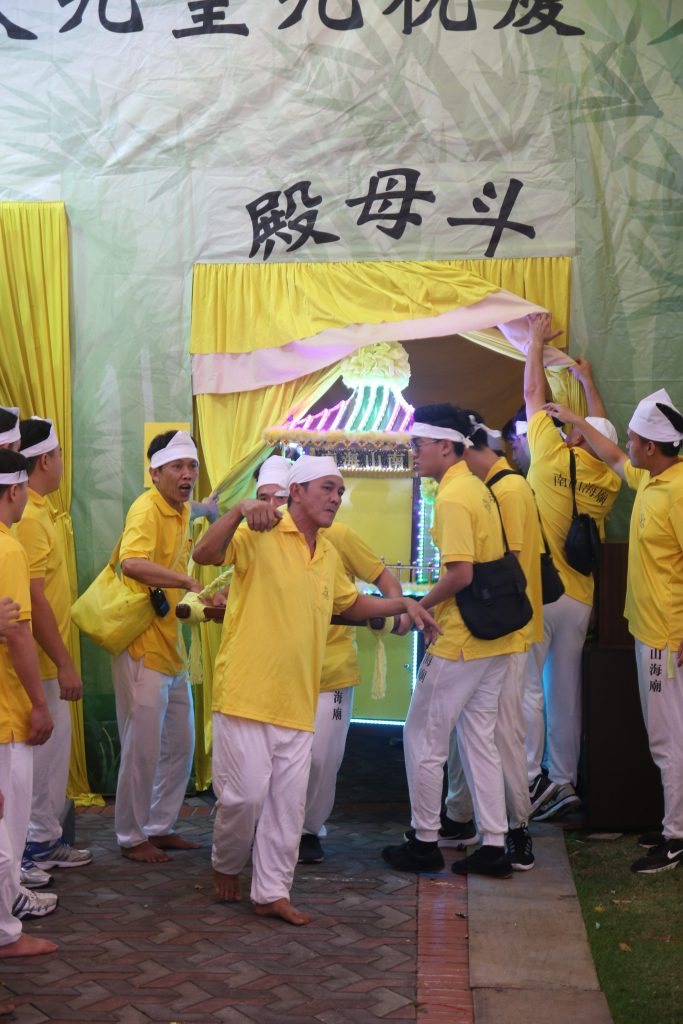
A very important feature of the Nine Emperor Gods Festival is the exchange of visits between Nine Emperor Gods temples. Nan Shan Hai Temple organises a yew keng, which involves the Nine Emperor Gods from the temple visiting other temples to pay respects and exchange gifts and greetings. The Nine Emperor Gods travel in their palanquins, accompanied by a large entourage and a full array of vanguards. The temples visited include, in order of sequence, Nan Bei Dou Mu Gong, Charn Mao Hern Kew Huang Keng, Lorong Koo Chye Sheng Hong Temple, Leng San Giam Dou Mu Gong, Leong Nam Temple, Kew Ong Yah Temple Tou Mu Kung (Upper Serangoon), and Hong San Temple.
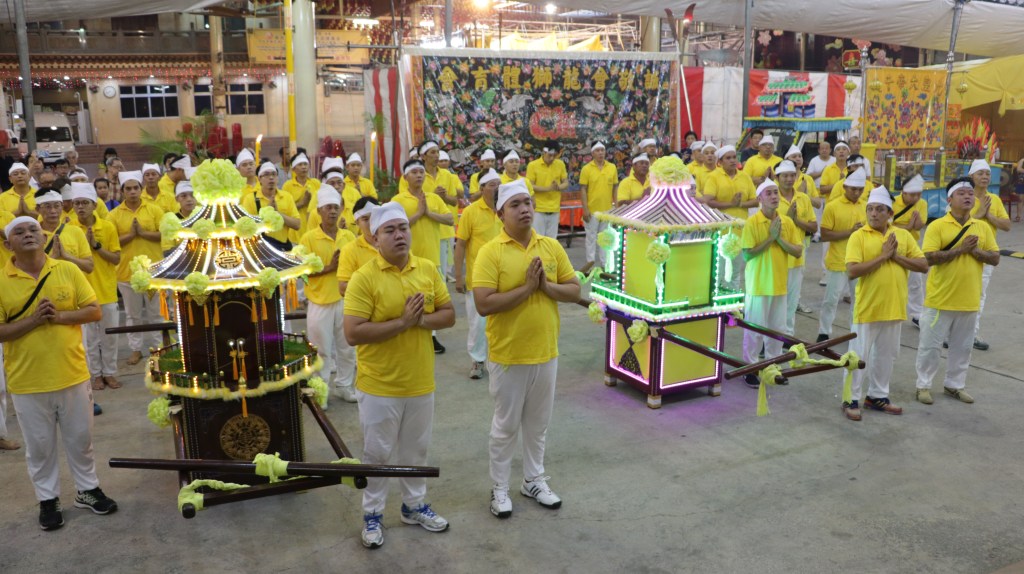
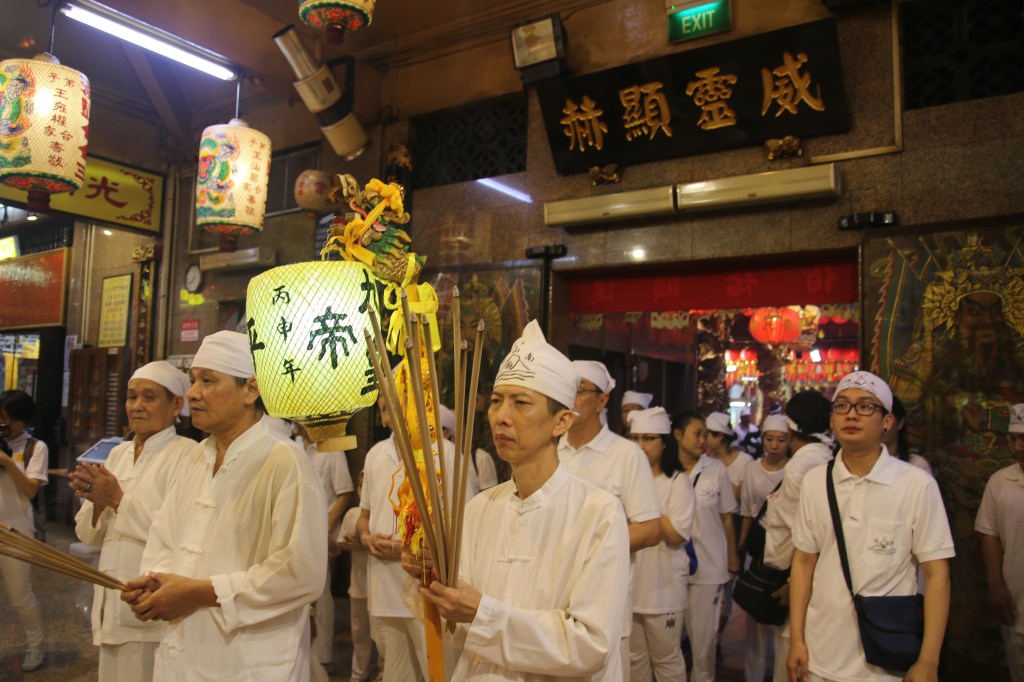
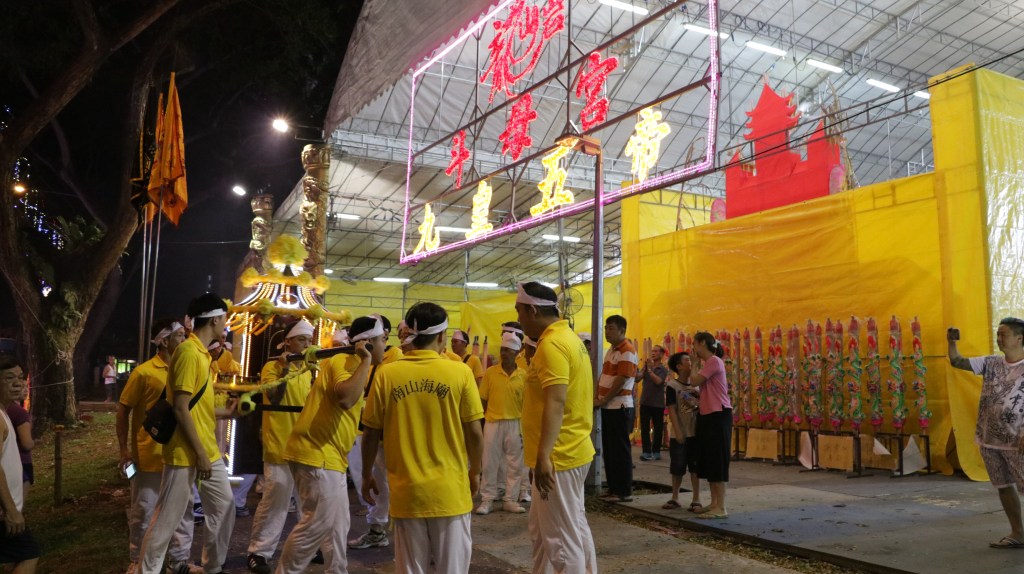
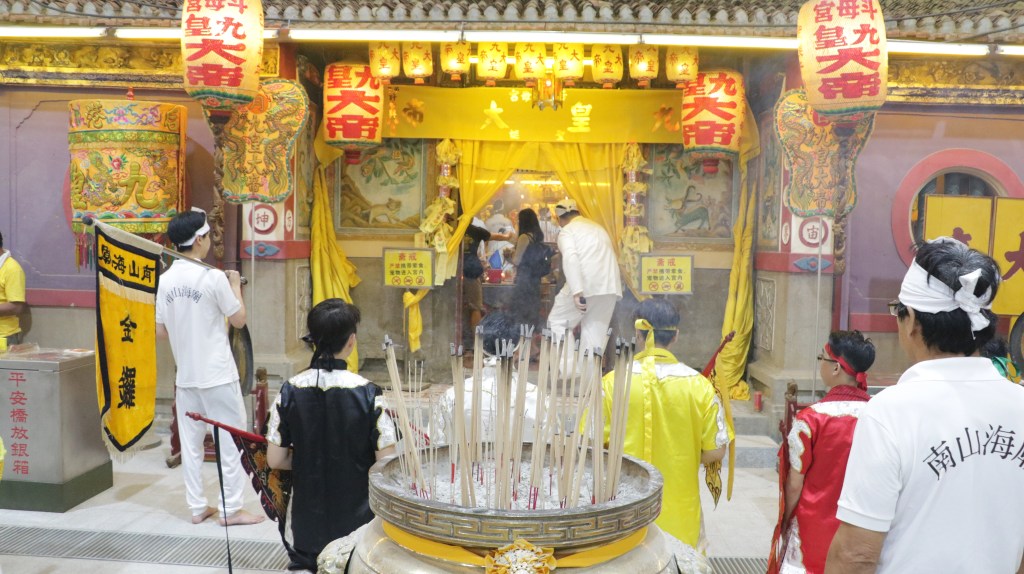
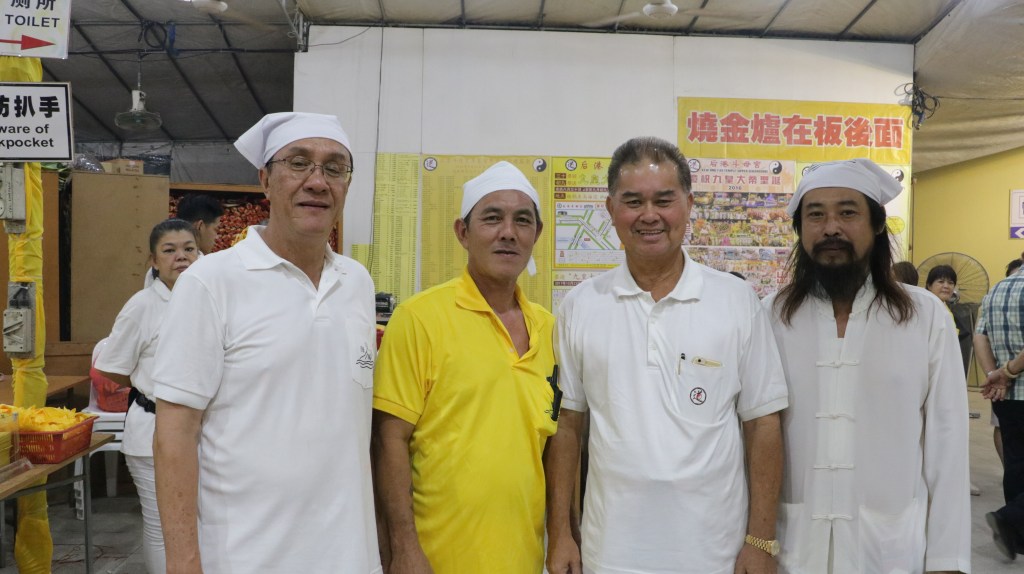
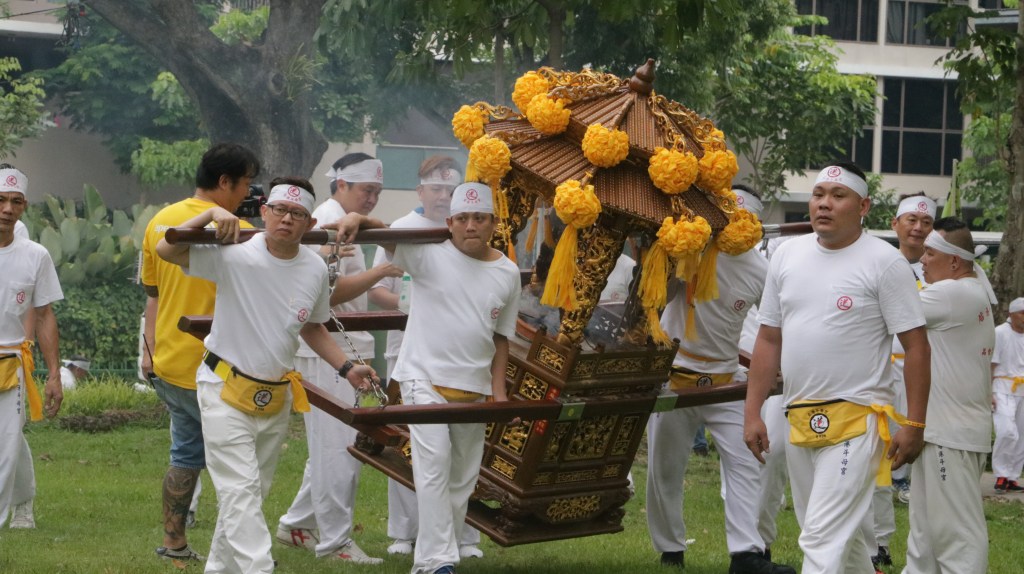
The visiting entourage is preceded by a lion and dragon dance troupe, which announces its arrival. The core contingent follows, with the five vanguards at its helm. They are followed by the incense censer and flag bearers, then the palanquins. The rest of the devotees round off the procession. The vanguards ‘purify’ and clear the path with their whips whenever the contingent crosses a boundary. At the entrances to some of the temples visited, the vanguards from Nan Shan Hai Temple and the host temple greet each other with the cracking of their whips. During the visit, greetings, gifts, and incense are exchanged between temples, while the Nan Shan Hai contingent pays its respects collectively. Crowds throng the various temples to witness these visits and exchanges.
Temple Visiting
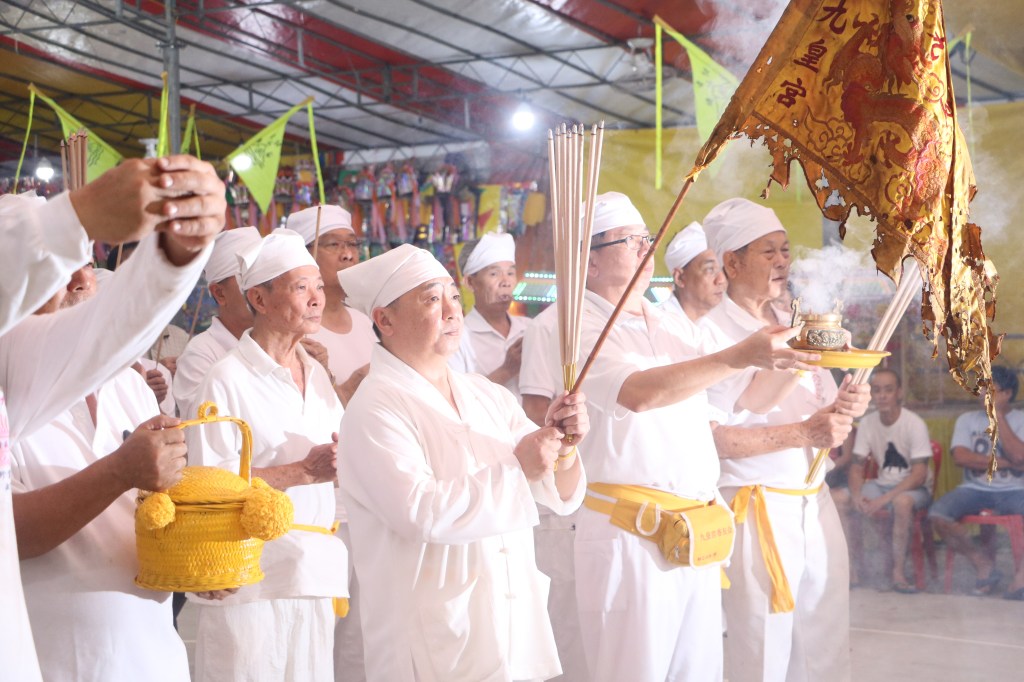
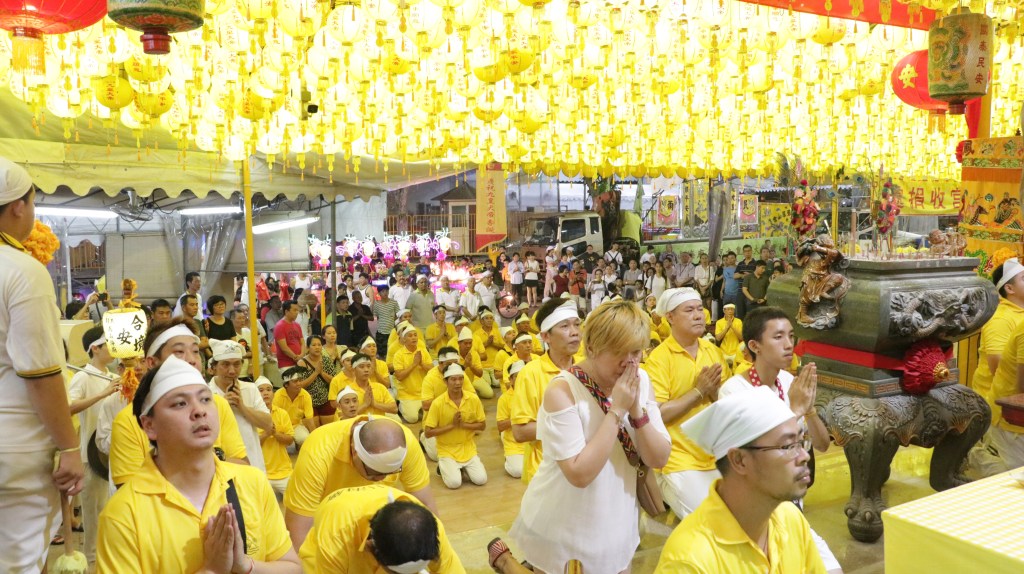
Other Nine Emperor Gods temples also visit Nan Shan Hai Temple during the festival. There are two forms of visits. The first is the larger-scale yew keng, in which the Nine Emperor Gods in their palanquins, and for some temples, spirit mediums, visit the temple. They are accompanied by a large contingent of volunteers and devotees, as well as lion and dragon dance troupes. The second is the can bai 参拜, which consists of a much smaller contingent led by the incense censer, other symbols of the temple, and a small group of temple committee members. They are sometimes accompanied by a small group of devotees and a single vanguard.
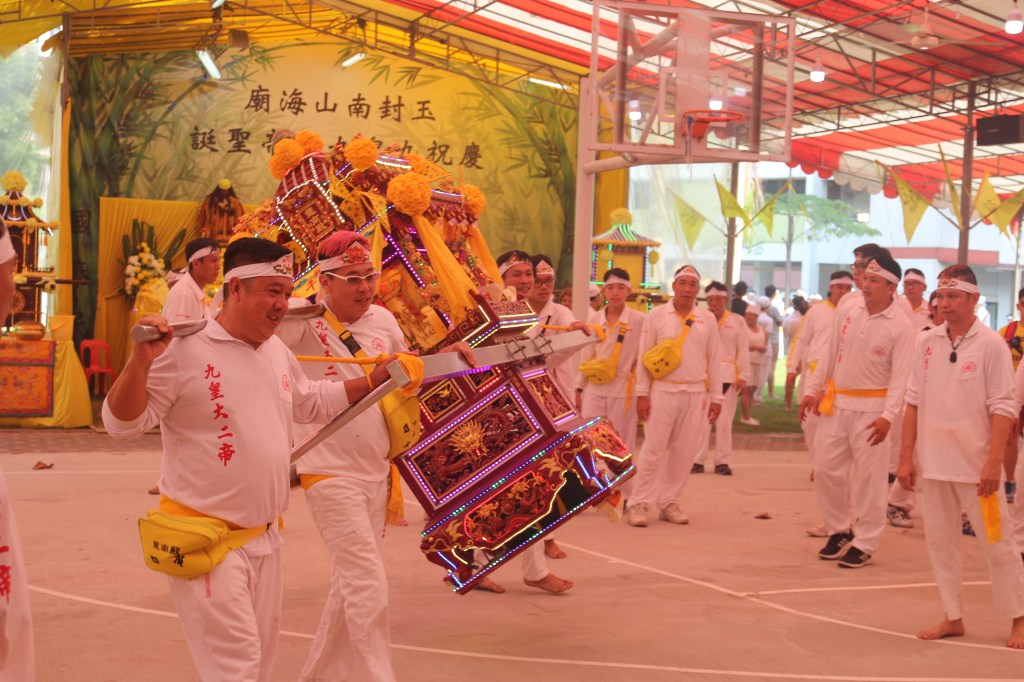
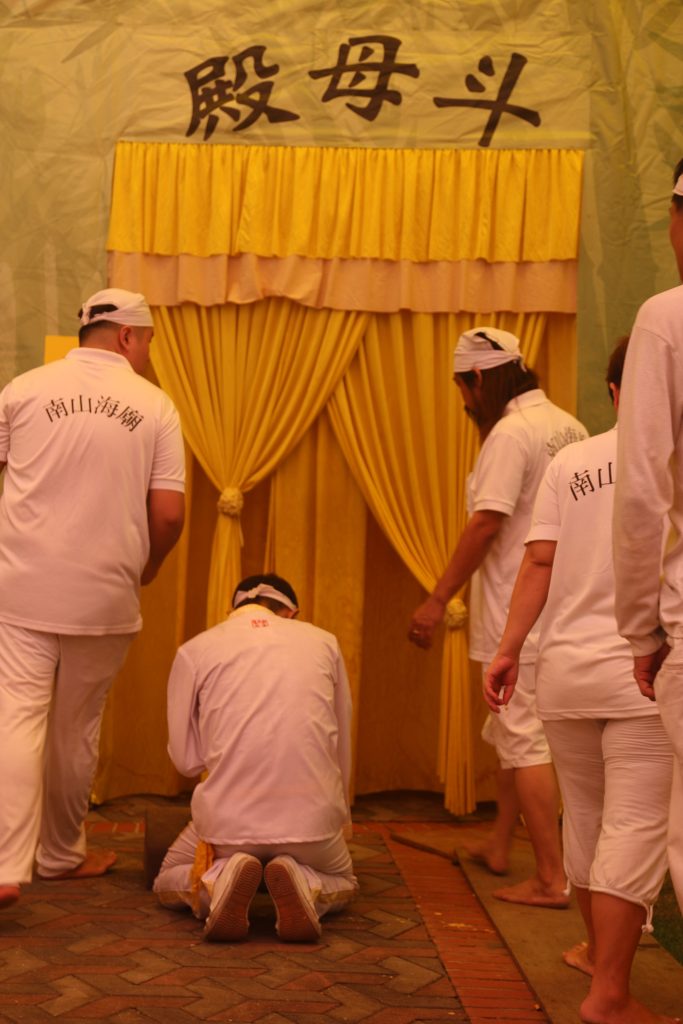
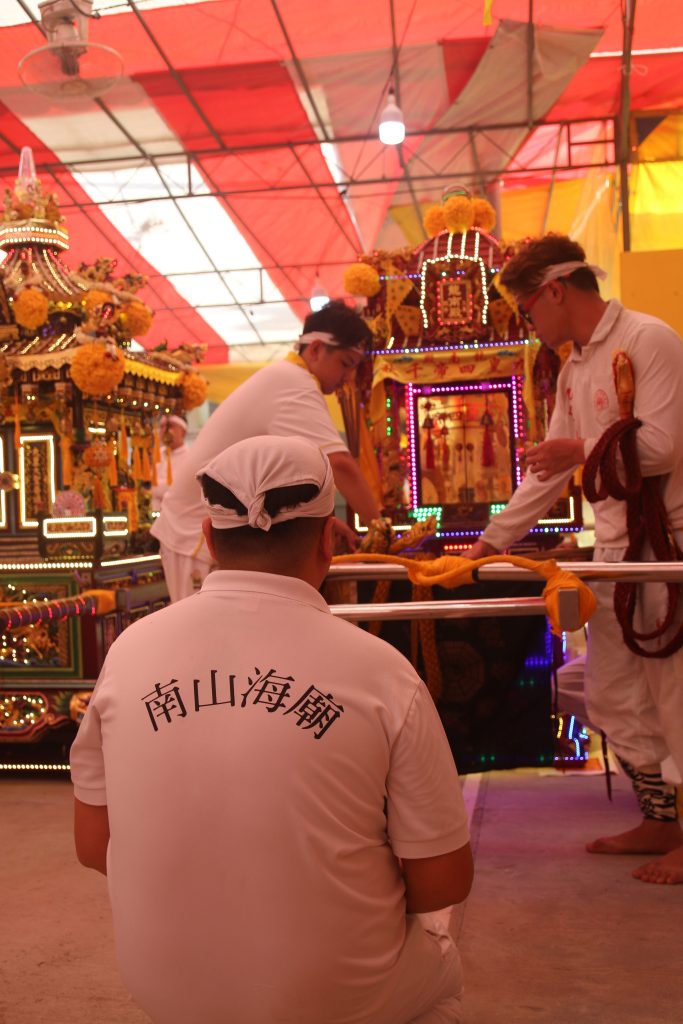
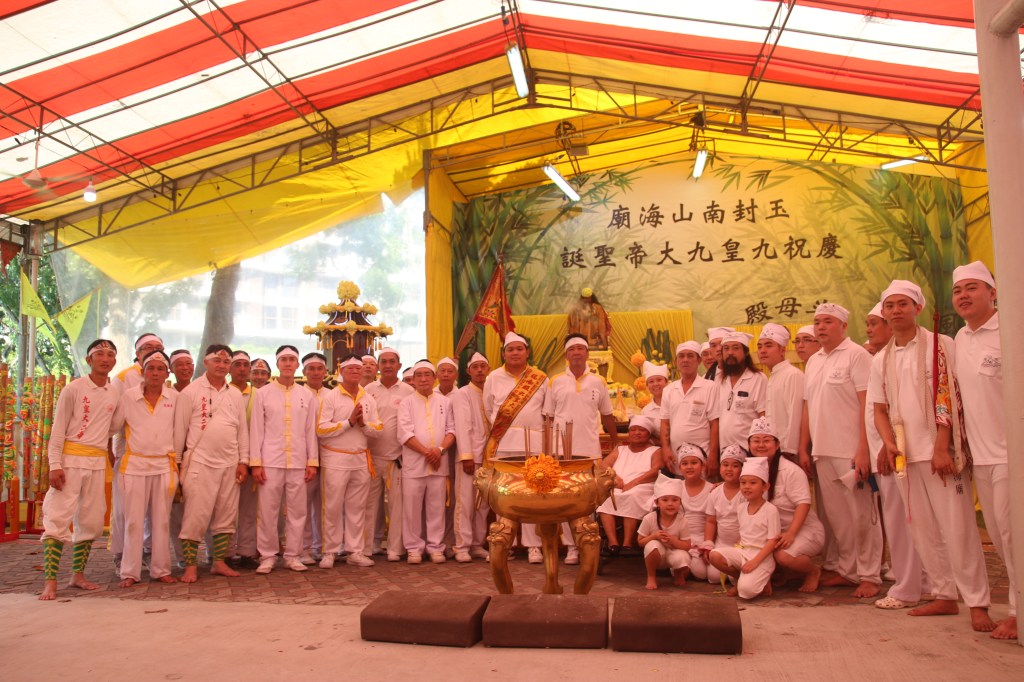
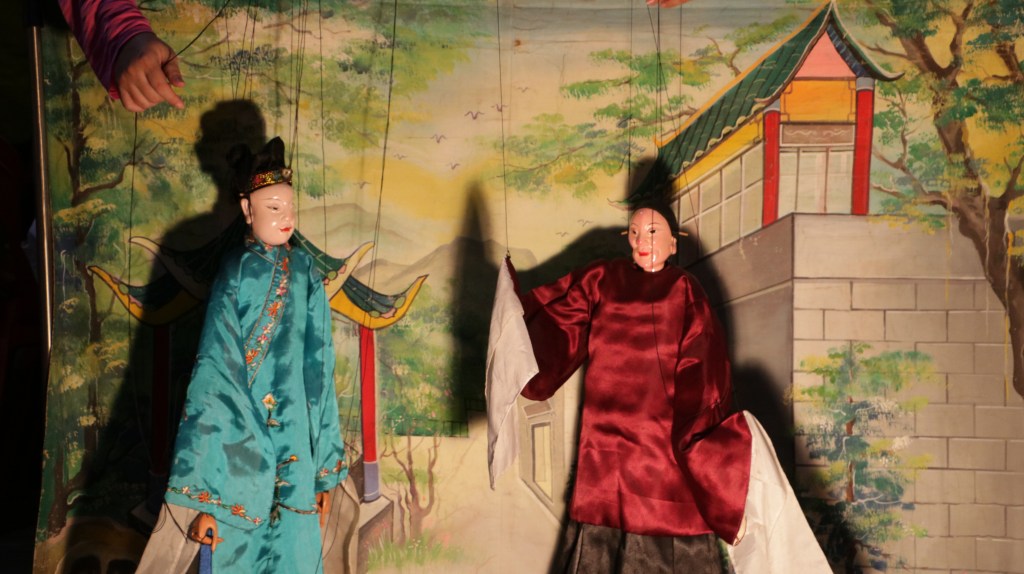
Over the next two days, Nan Shan Hai Temple receives further visits from other temples and returns these visits as well. During these “unofficial yew keng”, or “offerings of incense” 进香, devotees from both sides have time to linger and chat without the pressure of time and crowds.
“Actual Day” of the Nine Emperor Gods Festival
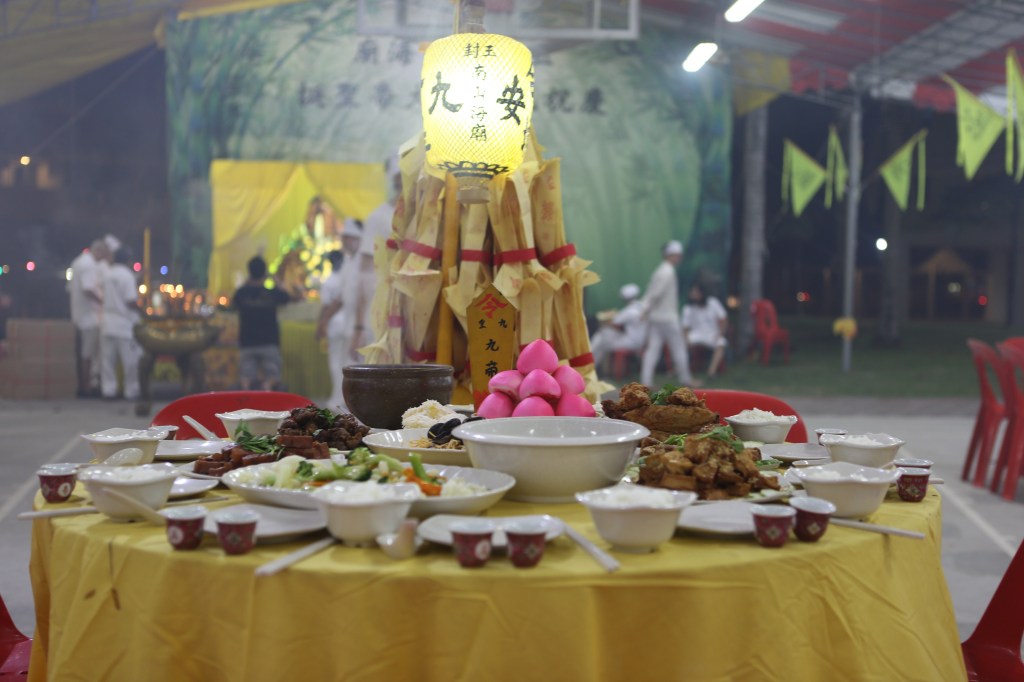
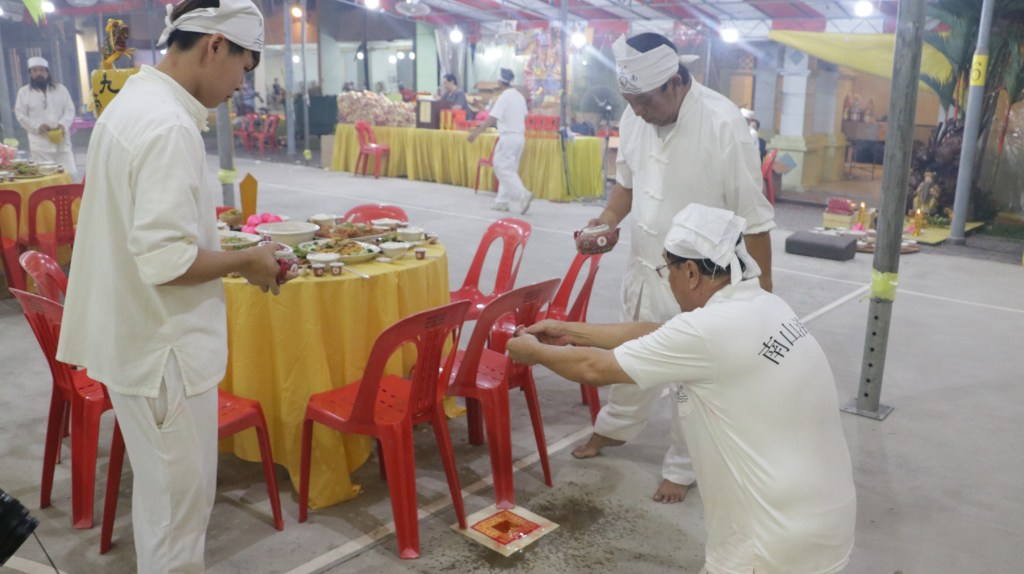
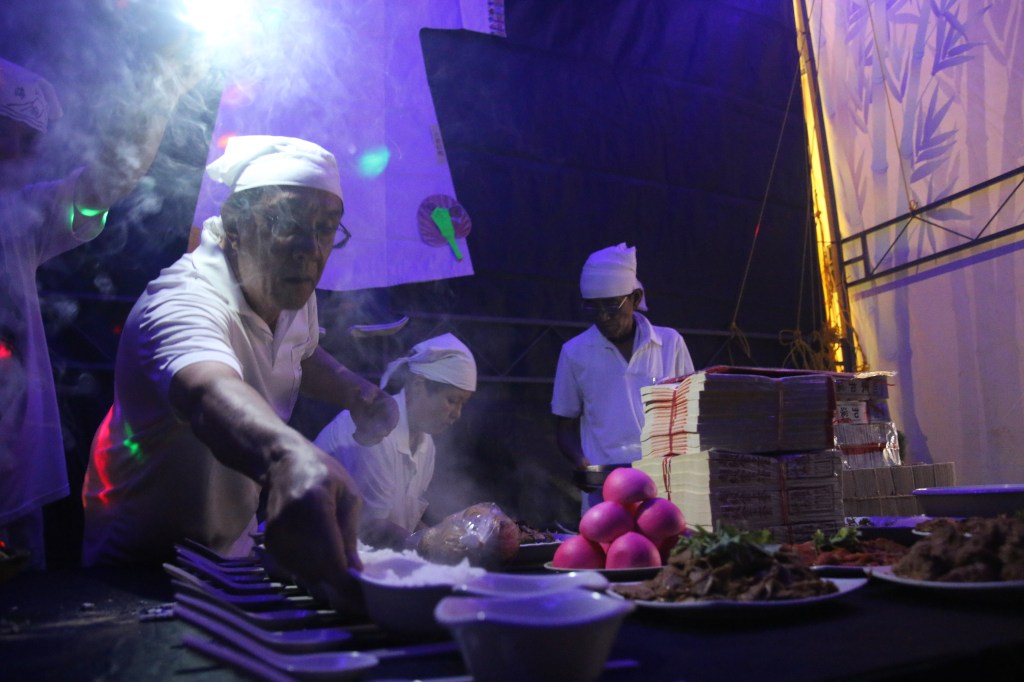
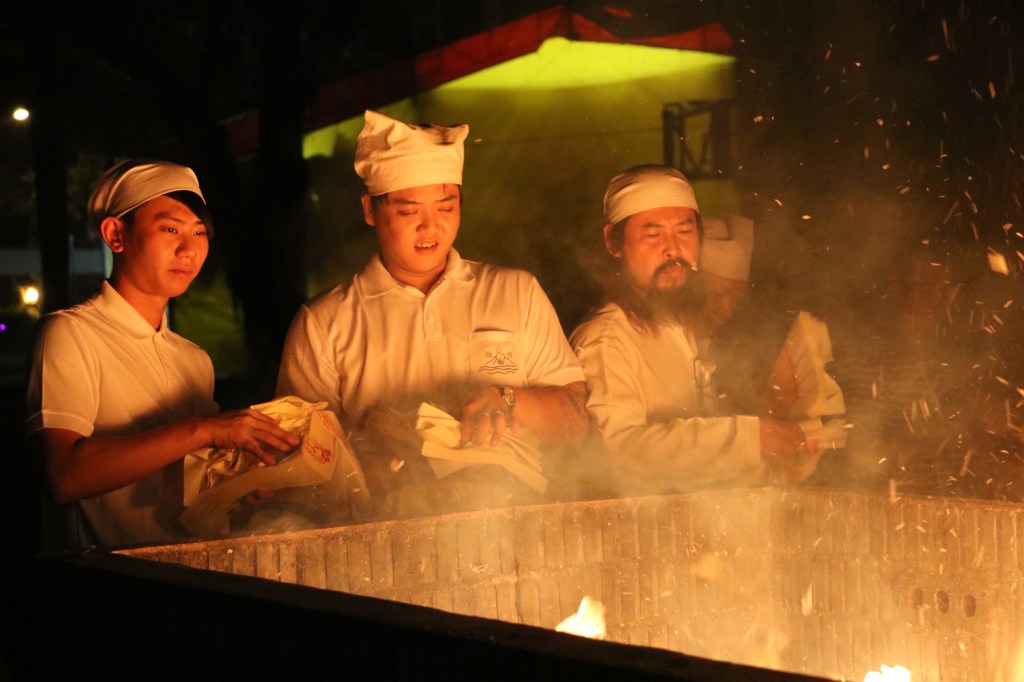
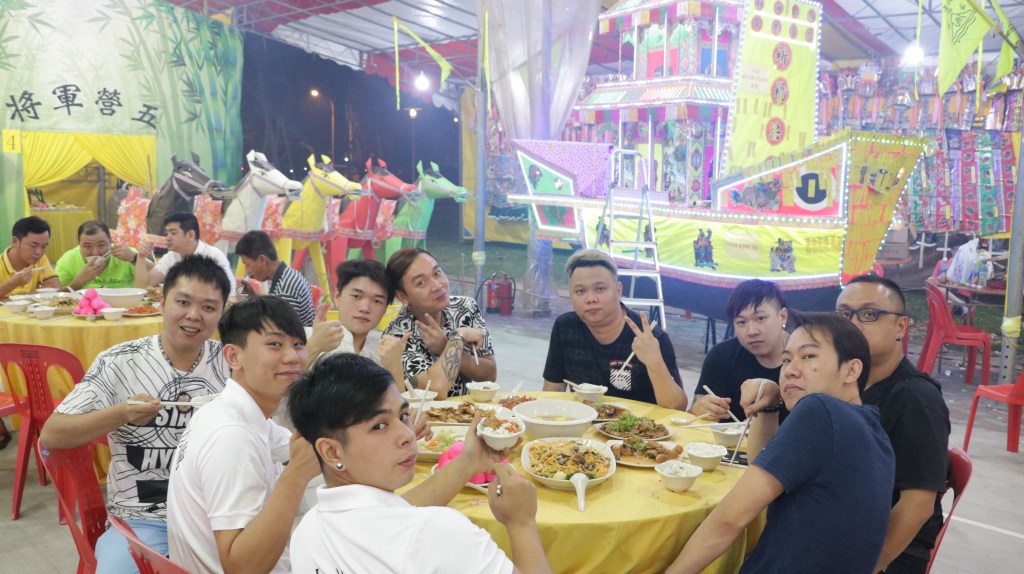
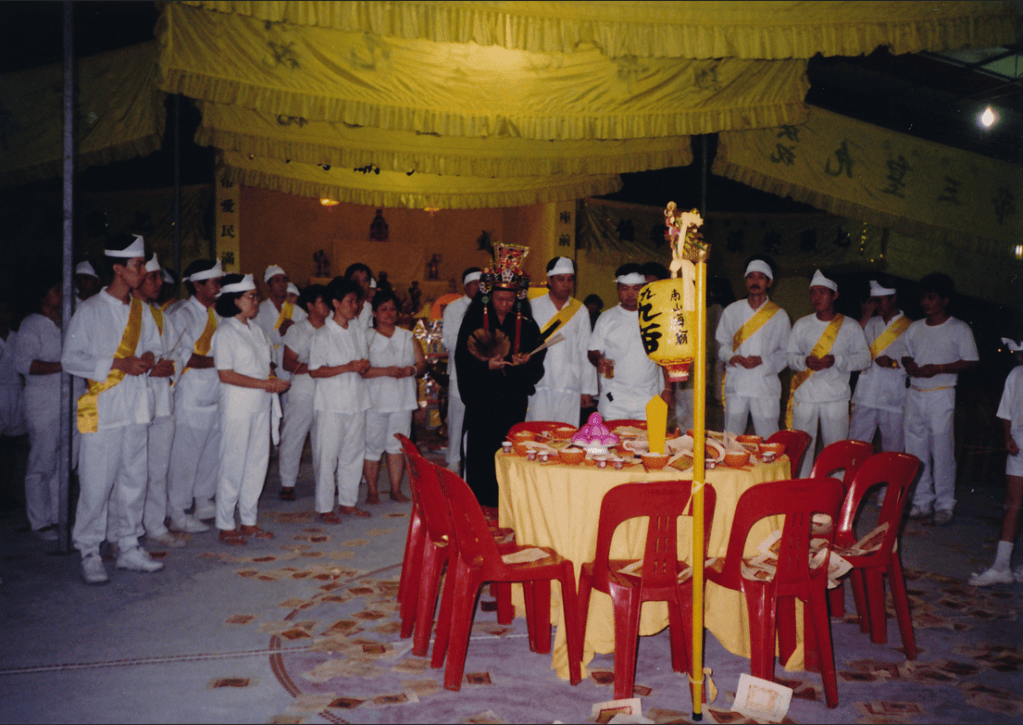
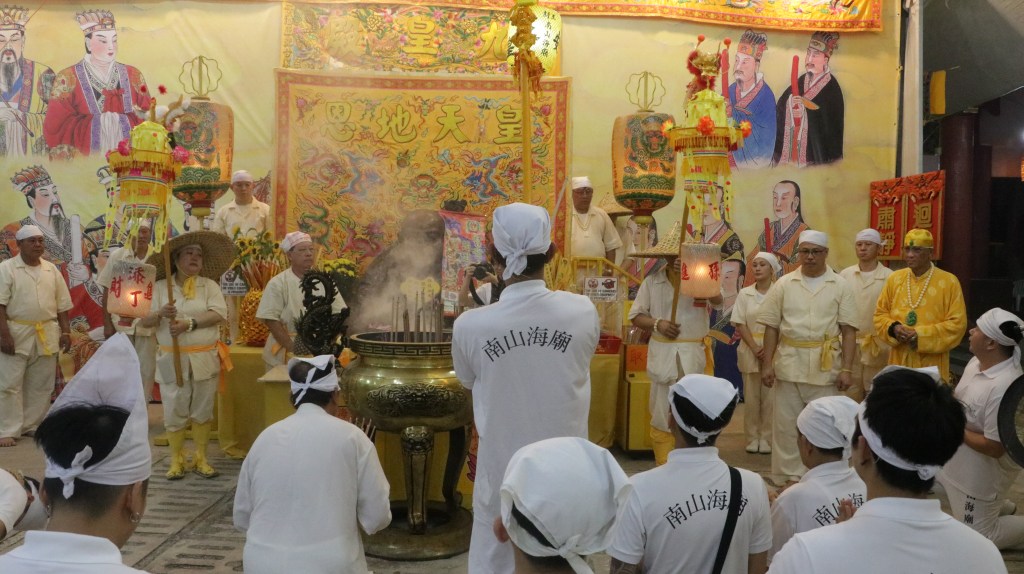
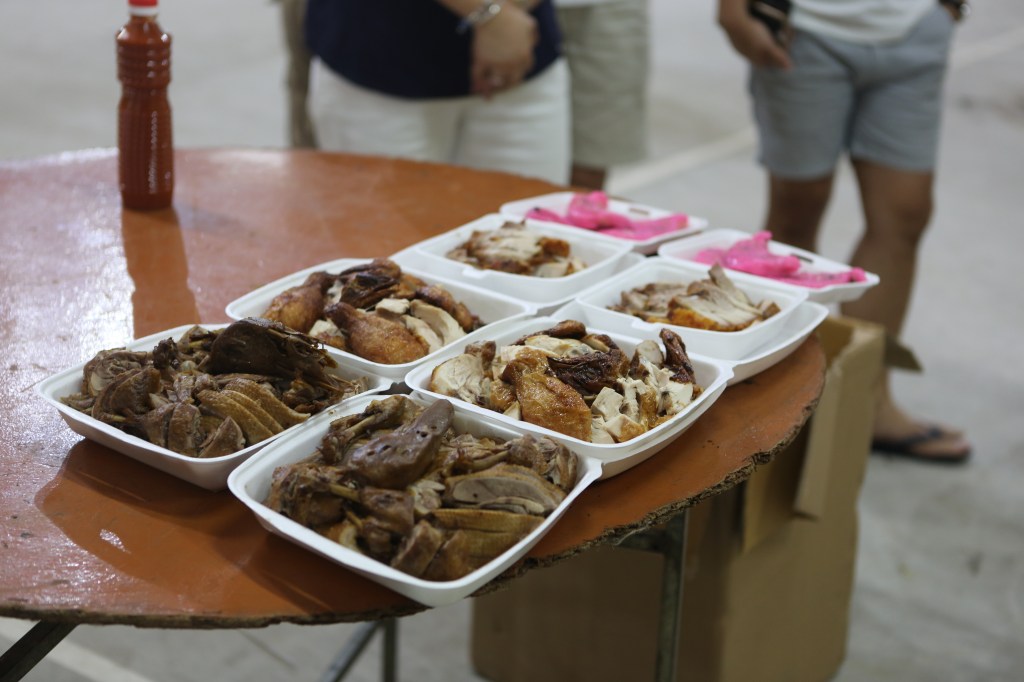
A nine-table feast is held for the Nine Emperor Gods at the turn of midnight, marking the start of the sixth day 初六, or “actual day” 正日, of the Festival. Each table is laid out with a sumptuous spread of vegetarian dishes for each of the Nine Emperor Gods. Temple volunteers and devotees offer tea at every table in a ceremony that involves kneeling and pouring the tea onto joss paper placed on the ground. The arrangement of the nine tables also highlights the special status of the Ninth Emperor God at Nan Shan Hai Temple. A table with the same food offering is also laid out at each of the altars in the festival area. After the Nine Emperor Gods have feasted, devotees partake of the food.
Everyday at the Festival
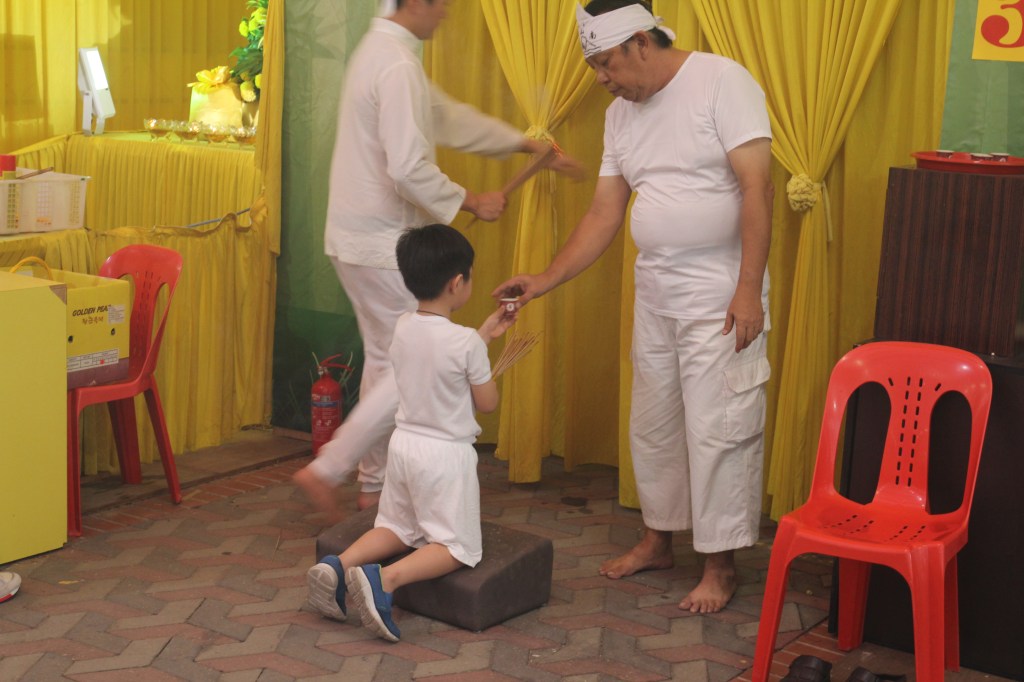
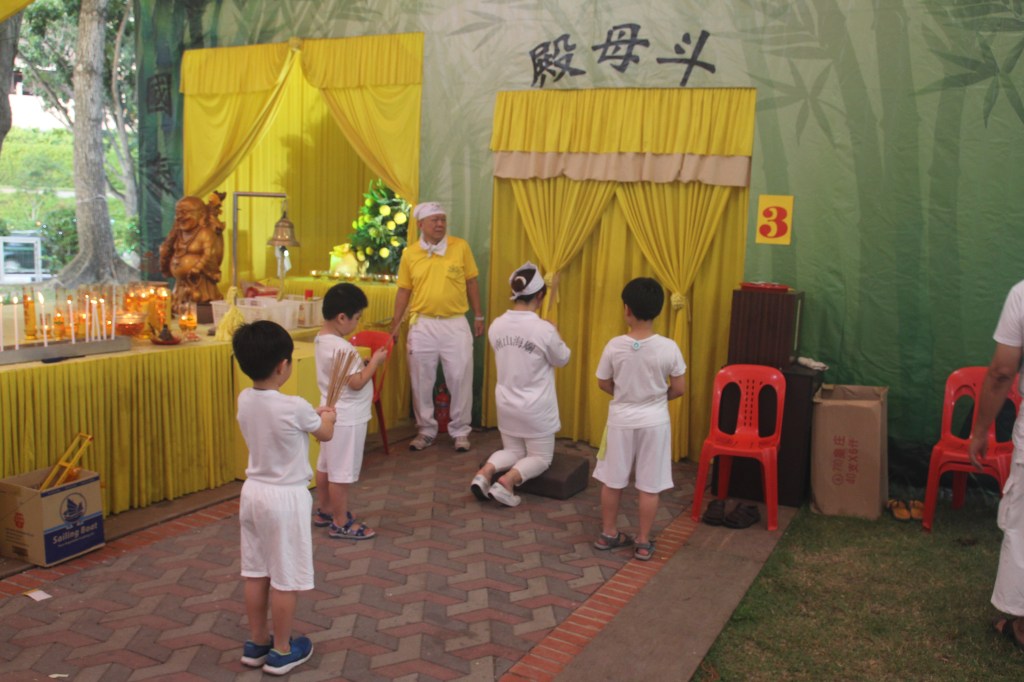
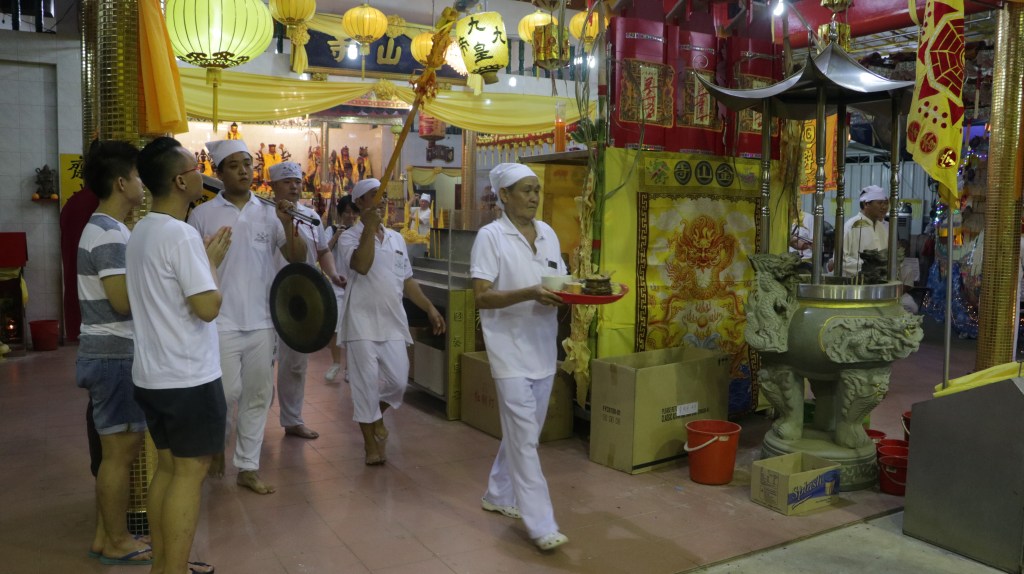
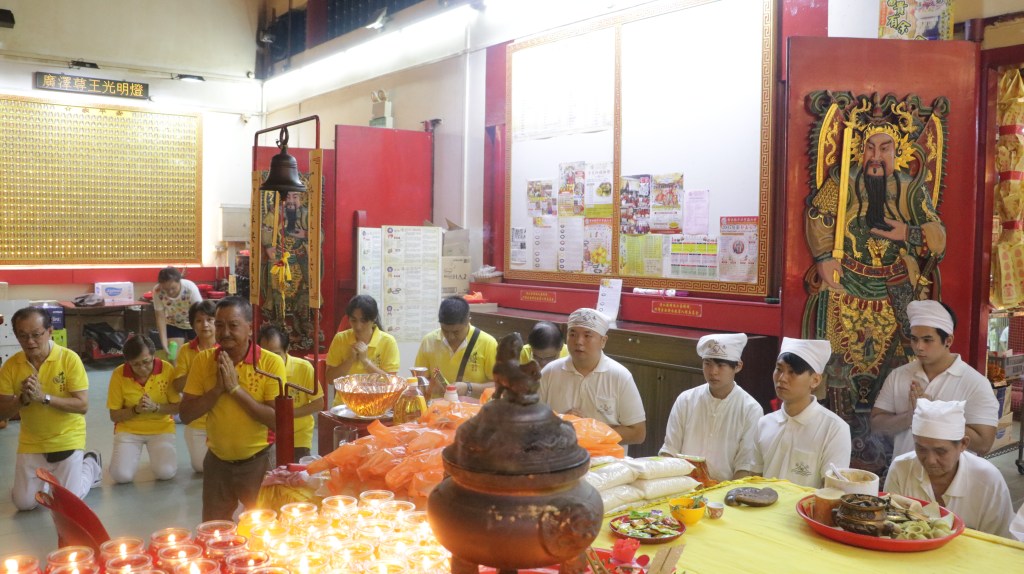
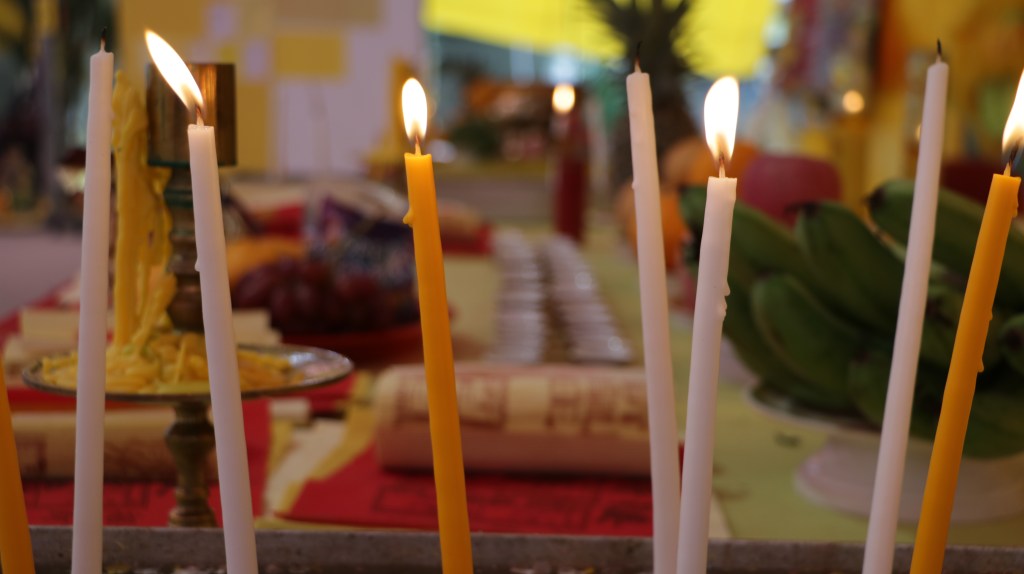
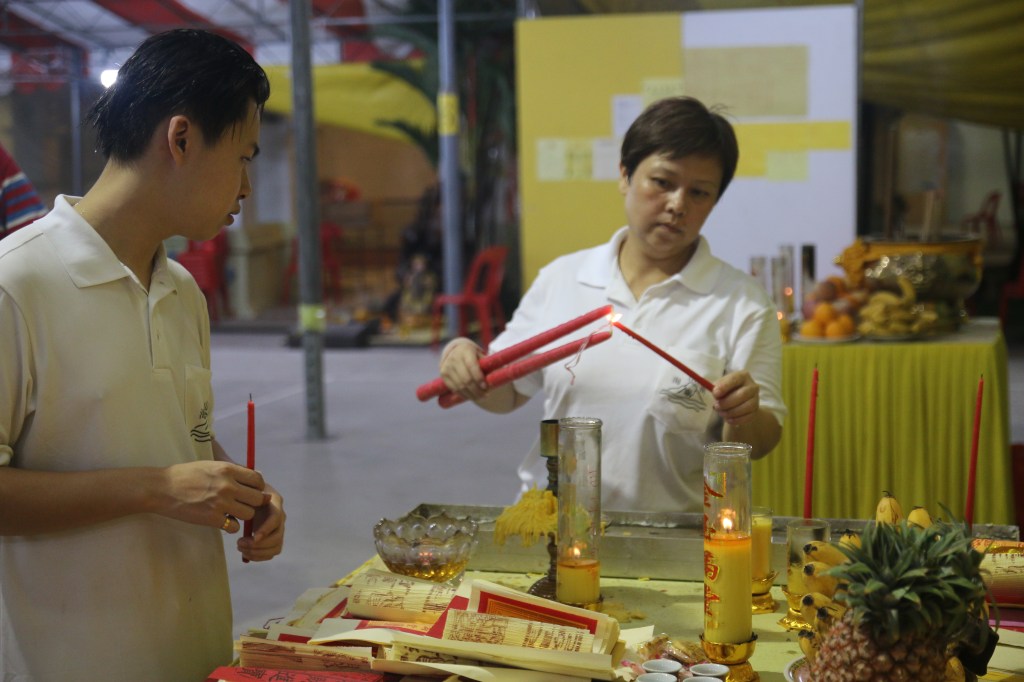
On ordinary days at the festival, a steady stream of devotees make their offerings as helpers assist with preparations for upcoming events. Volunteers continue to tie and embellish the dragon ship to be used for the sending off of the Nine Emperor Gods. They also check and secure the palanquins, change the offerings at the altars every day, and offer tea to the deities. A volunteer always mans the reception counter. Behind the counter, volunteers pack joss sticks in bunches of 33 and fold incense paper ingots. Devotees can make cash donations or sponsorships, or purchase paper robes, joss paper, and incense at this station.
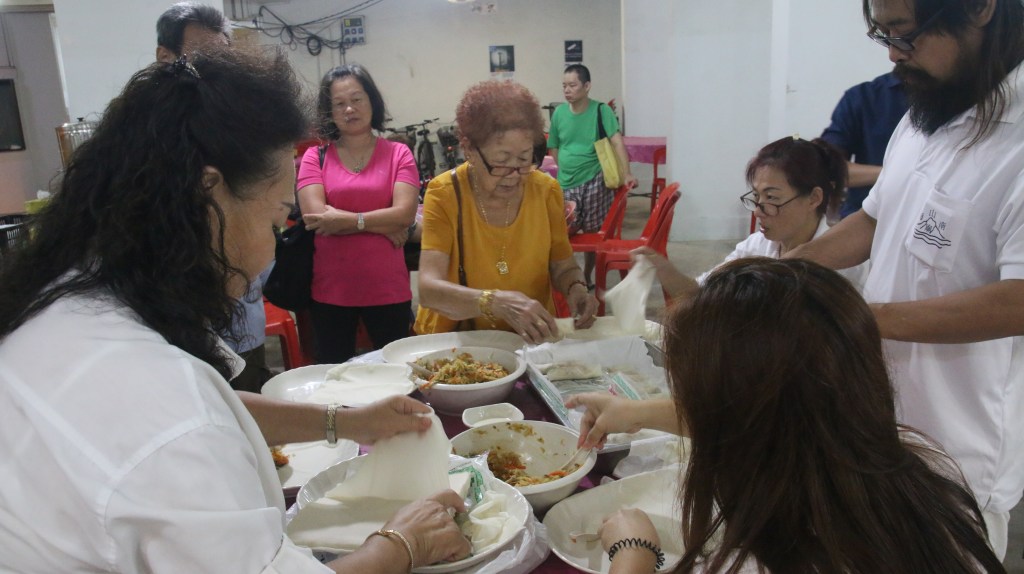
The Nan Shan Hai community is a close-knit one. Many devotees have known each other for years and were neighbours either in Jalan Ang Teng or at the present location on Bedok Reservoir Road. Exclamations of “You have grown so big now” and “Long time no see” are often heard during the festival. Devotees eat together and share dishes, and gather to arrange offerings on the altars, make popiah, or simply chat and catch up.
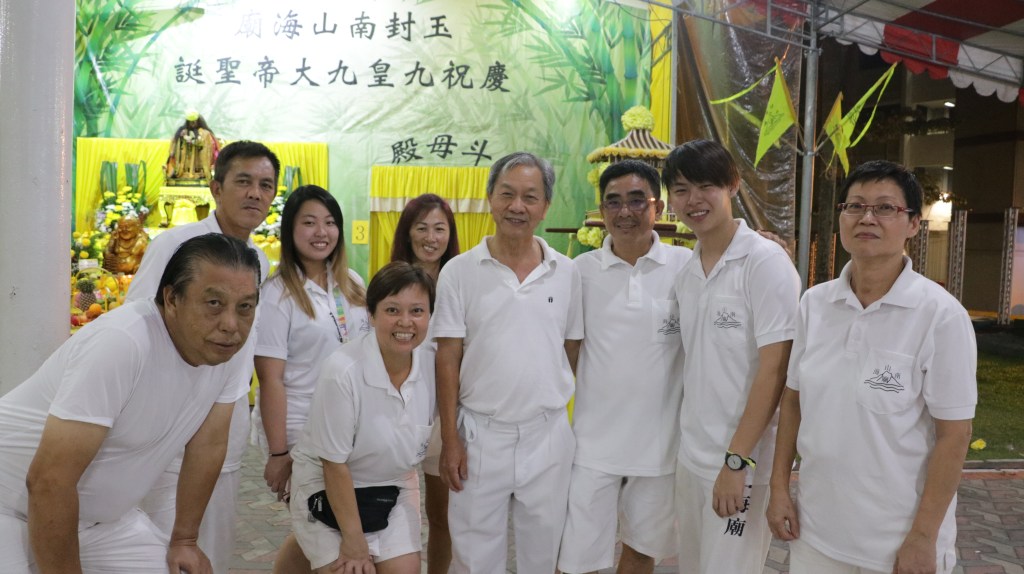
Members of the temple committee have continued to organise and sustain the Nine Emperor Gods Festival following Mr Goh’s passing. The priest has also become the authority on matters of ritual. Younger devotees, some of whom never met Mr Goh, have taken up key roles in the festival, such as serving as Vanguards or bearing the palanquins.
Mr Goh’s influence continues to be felt strongly in the temple and during the festival. Unique aspects of the festival introduced by him, such as the offering of tea to Dou Mu in the Inner Palace and the nine-table feast, continue to be practised and remain distinctive to Nan Shan Hai. Just as the Nine Emperor Gods are mourned and celebrated for their heroic deeds over the course of the festival, memories and stories of Mr Goh are collectively relived every year.
Sending Off the Nine Emperor Gods: Ninth Day
The ninth day of the ninth lunar month is also the busiest day at Nan Shan Hai Temple. It is the day for the sending off of the Nine Emperor Gods. From the morning onwards, final preparations are made. The waves on the platform for the Dragon Ship are painted, for example. In the late afternoon, the Daoist priest leads the temple committee and devotees in sending off the Jade Emperor and other deities and burning the offerings prepared for them. The Dragon Ship is then carried to the transport waiting in the car park.
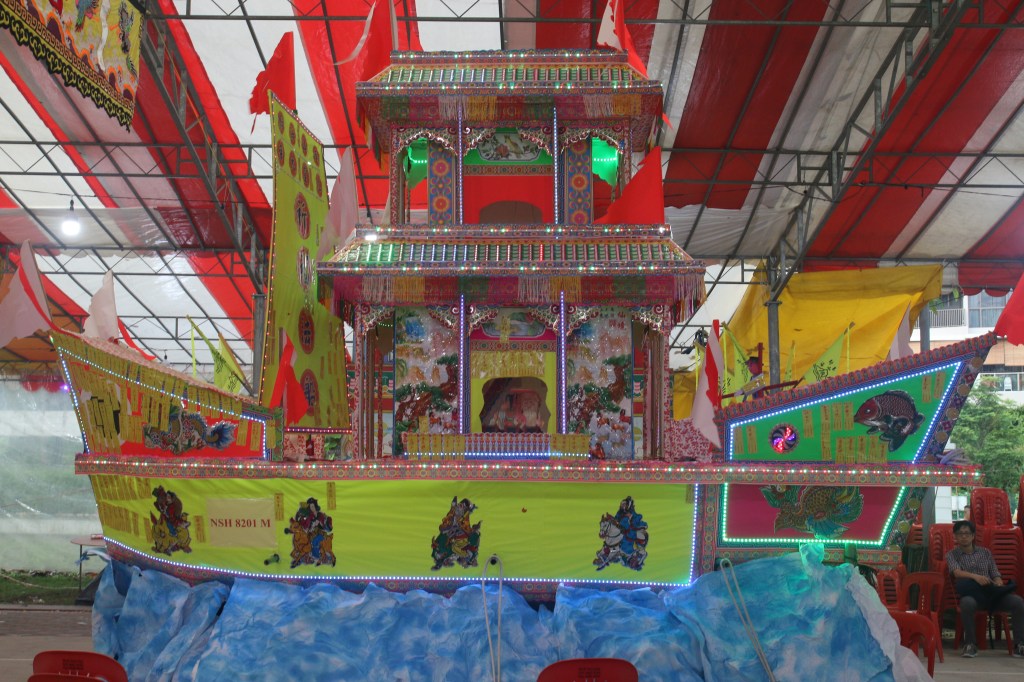
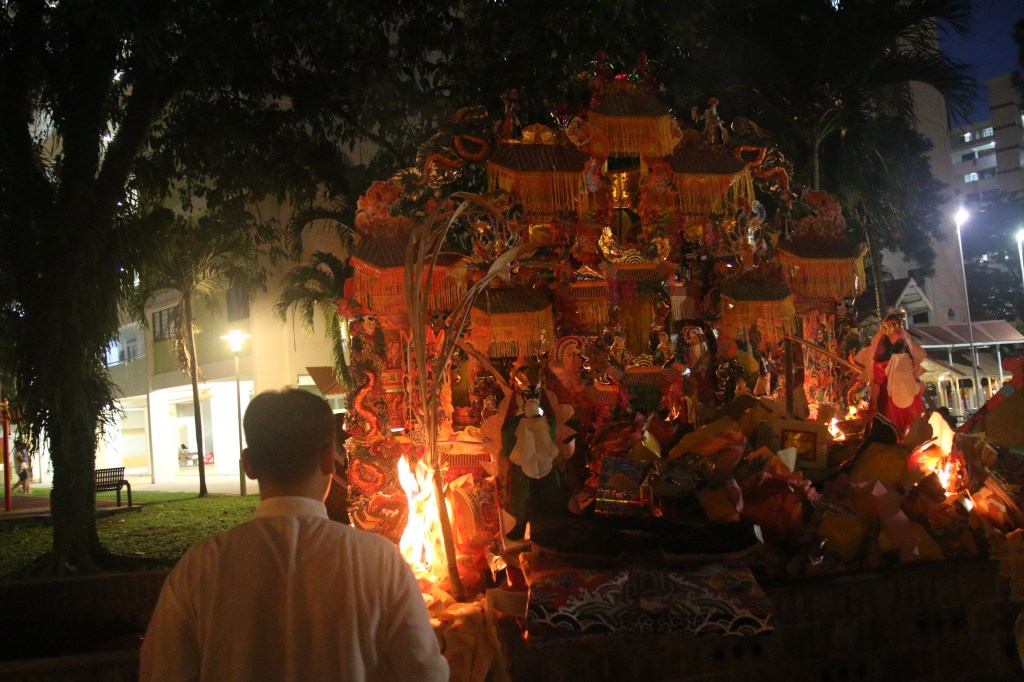
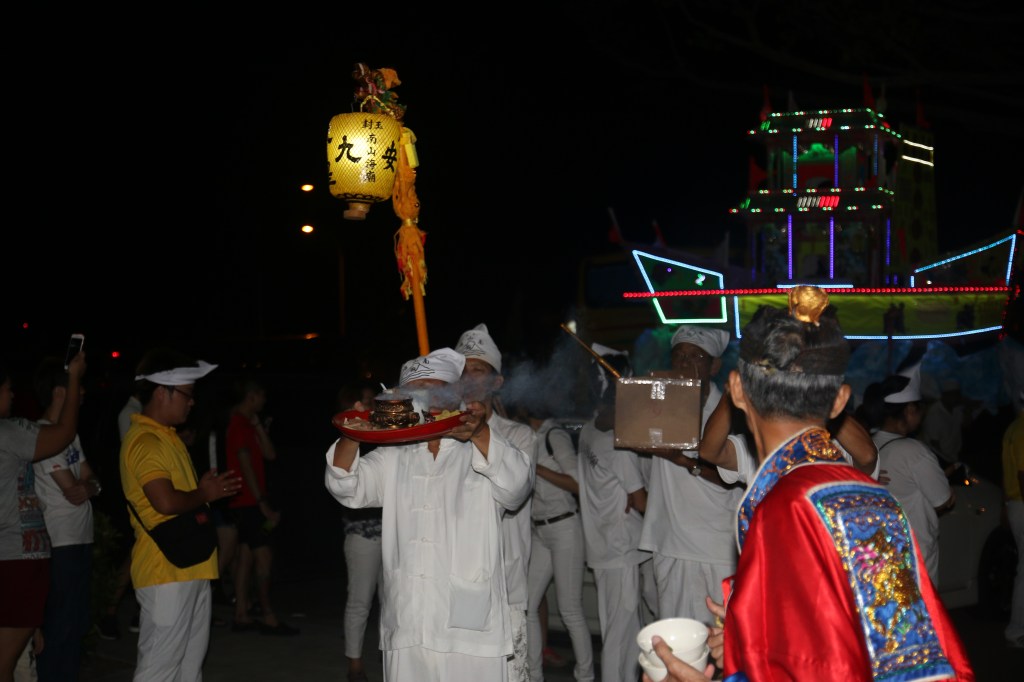
The sending off does not begin until the incense in the different censers at the festival bursts into flames. When this happens, the palanquins are carried into Dou Mu’s Palace to invite the Nine Emperor Gods to embark on their journey to the beach for the sending off. The core contingent, carrying the Dragon Staff, lantern, and smaller censer, then leaves for the beach. After paying their respects at each of the altars and being carried around the festival area, the palanquins are loaded onto lorries for the journey to the beach. Buses are also provided to convey devotees there.
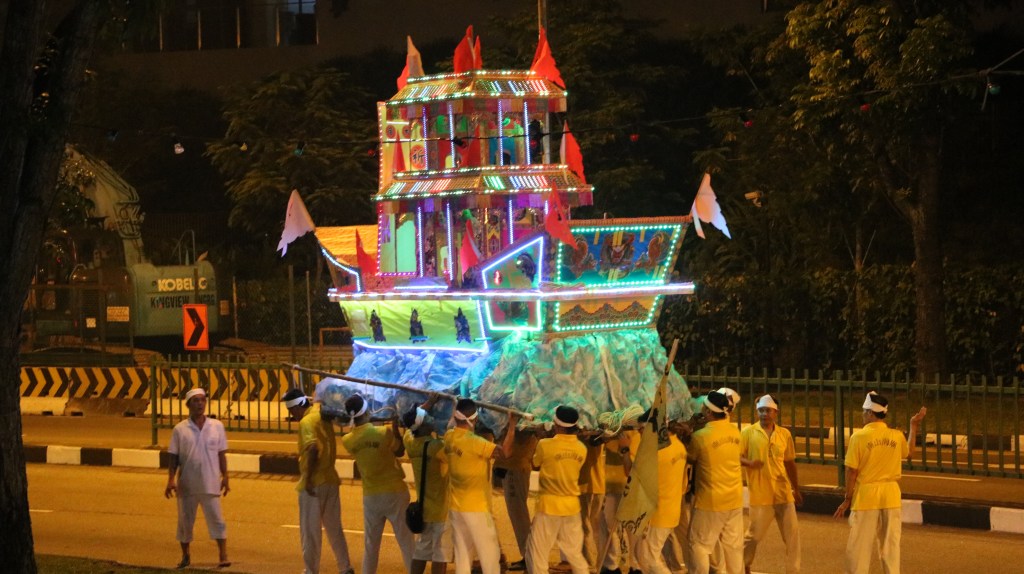
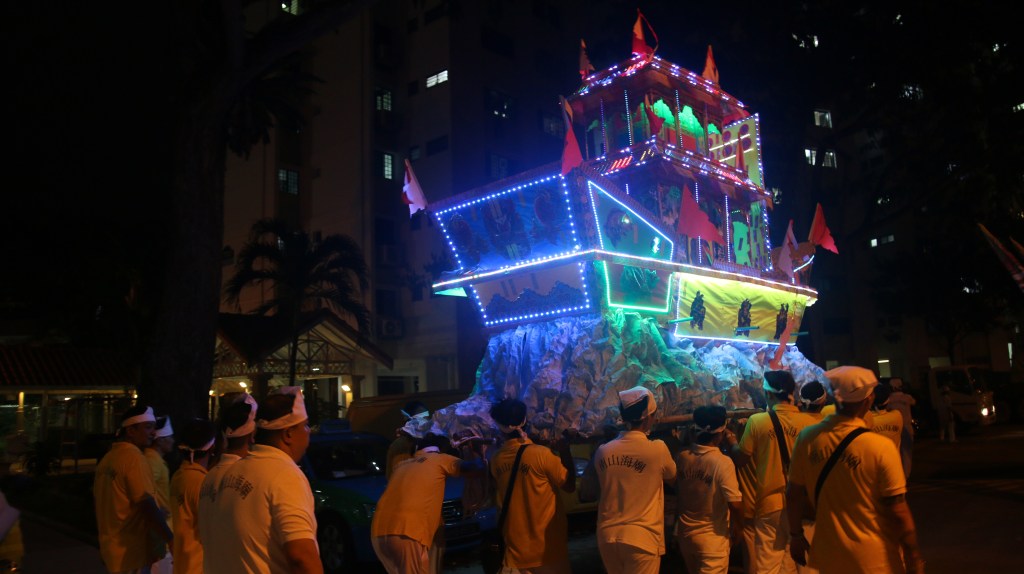
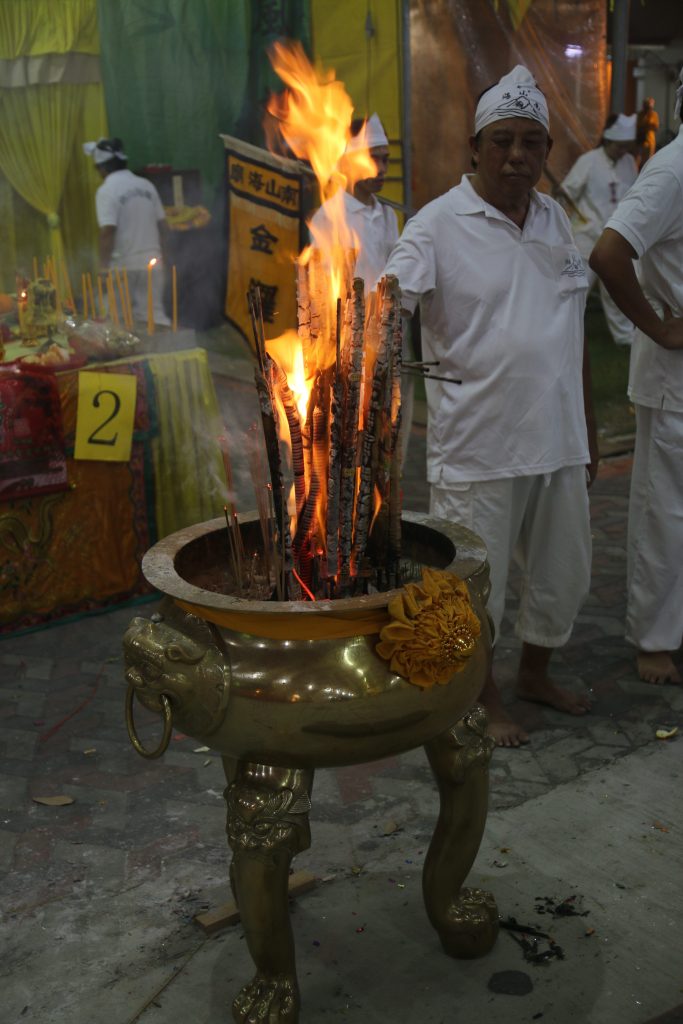
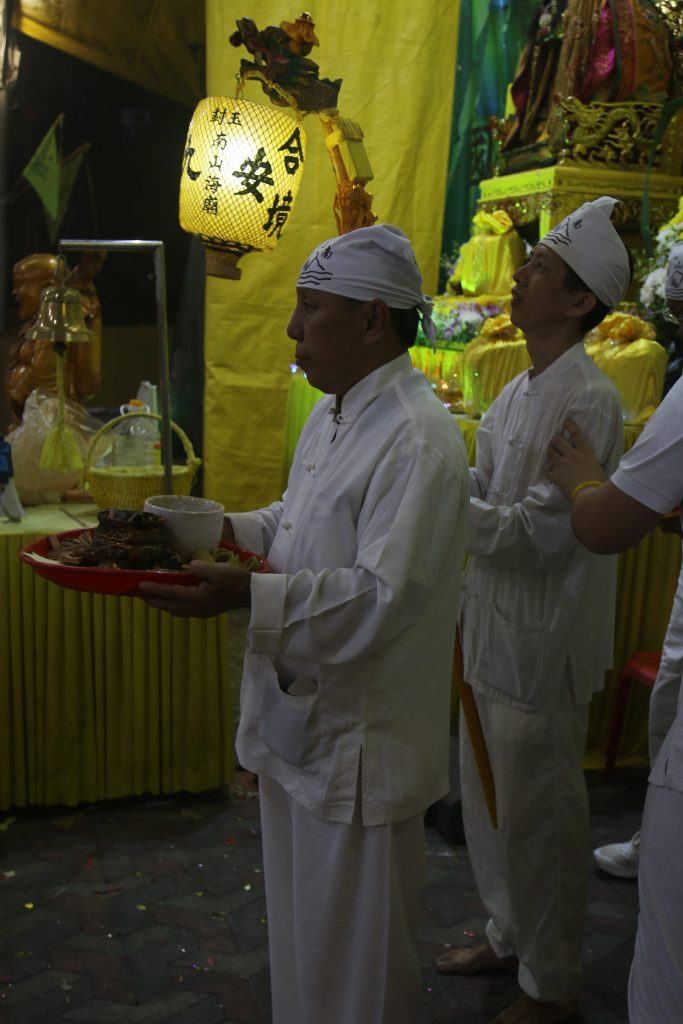
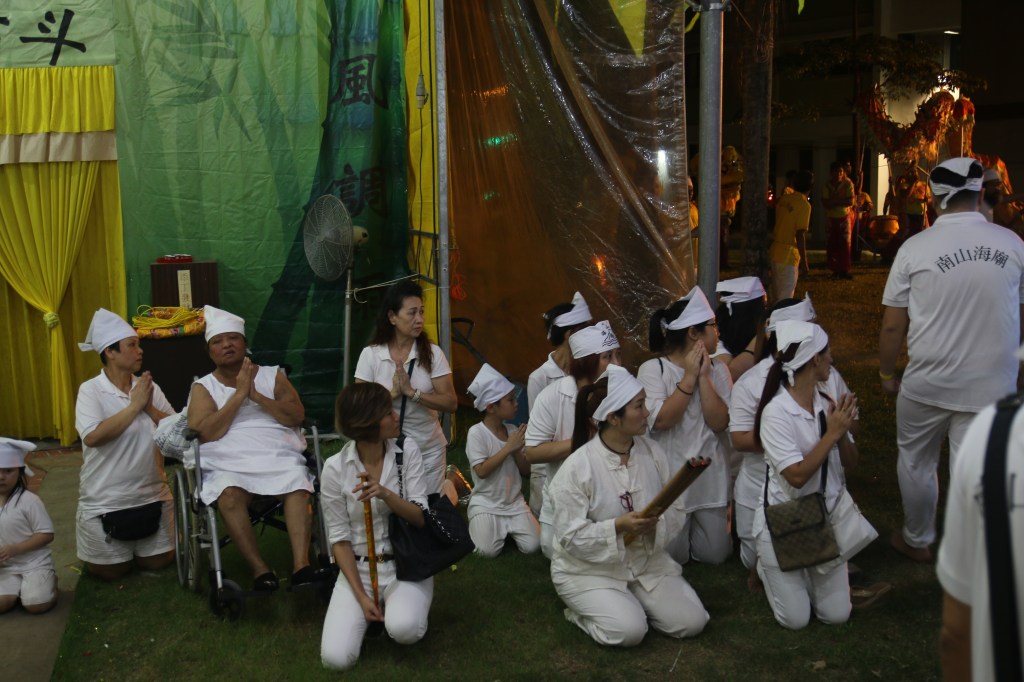
As the entourage arrives at Changi Beach, the offerings are laid out on the grass at the edge of the beach. The offerings include sandalwood incense, five oranges, tea leaves, and joss paper, as well as two rows of three teacups and two teapots. The palanquins are set down behind the offering area, while the Dragon Ship is positioned close to the water. The censer is once again invited from the palanquin and placed in the offering area. The Daoist priest oversees the sending-off ceremony and instructs the entourage on when to bow before the departing Nine Emperor Gods.
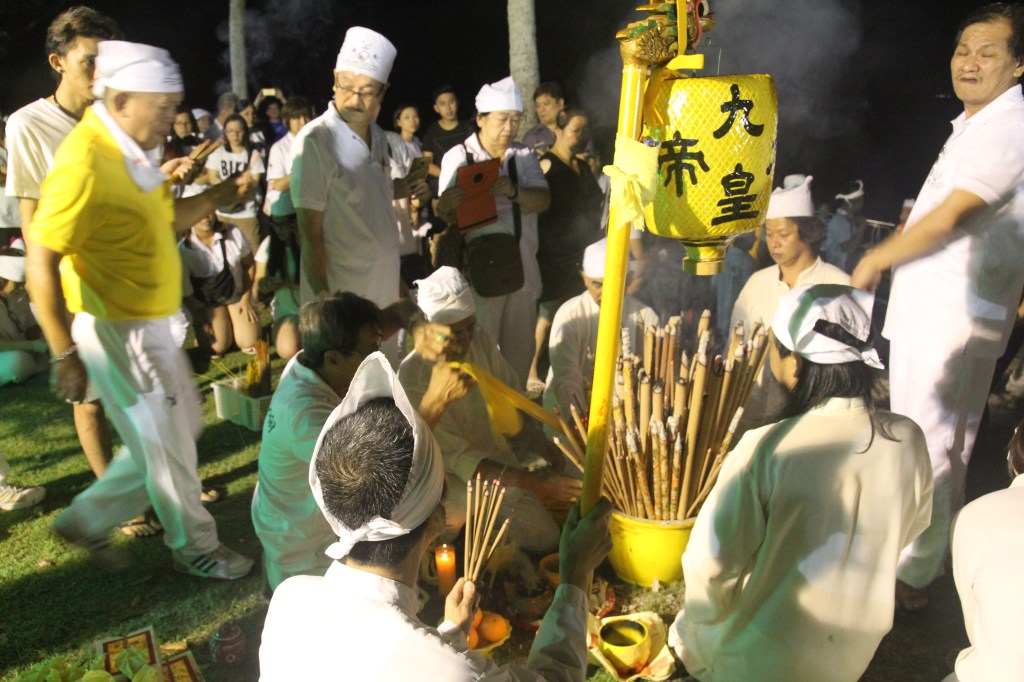
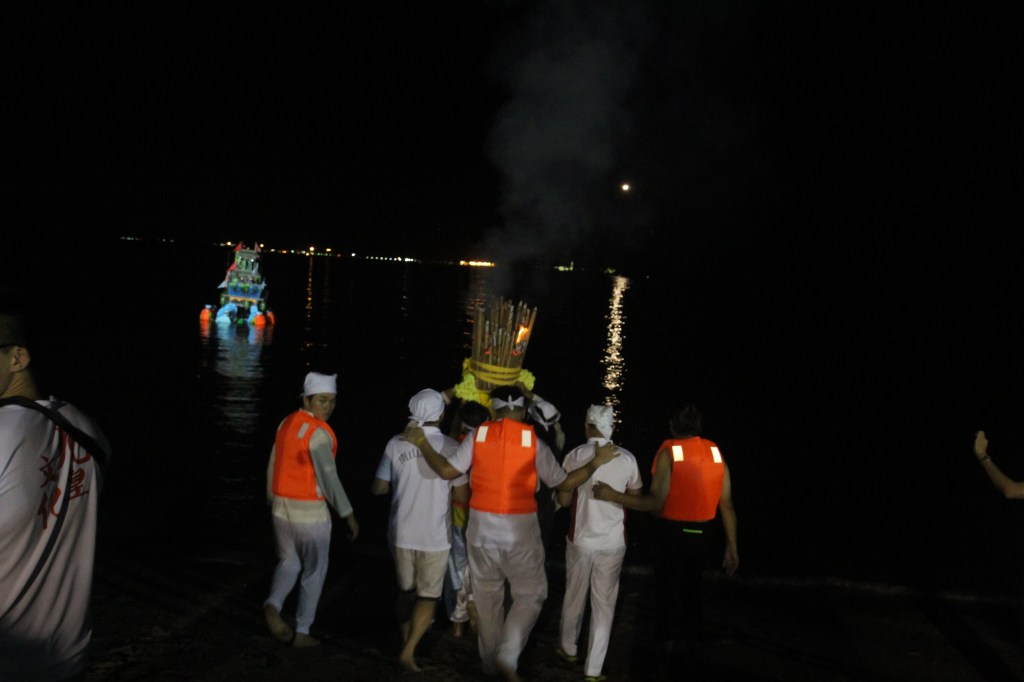
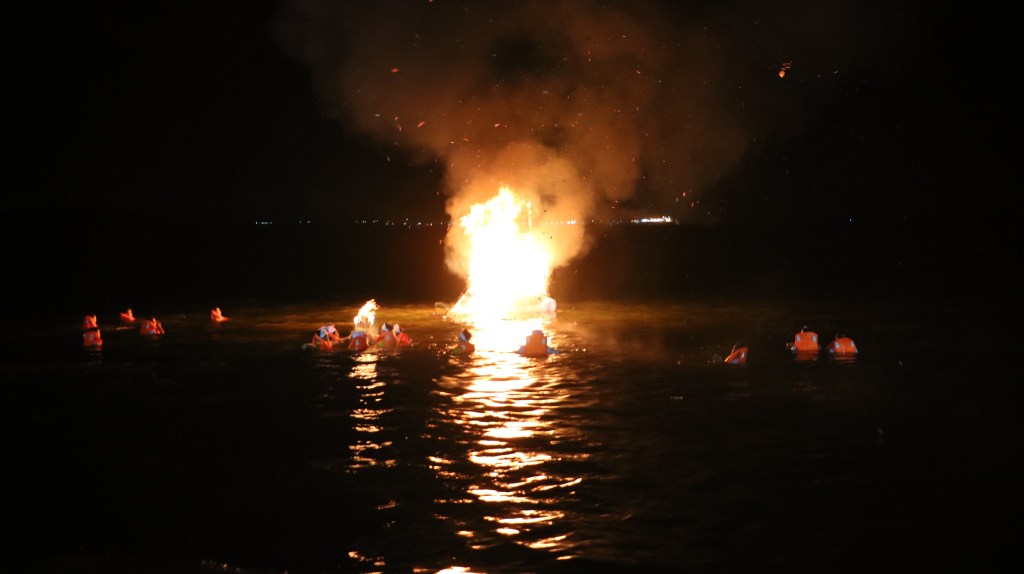
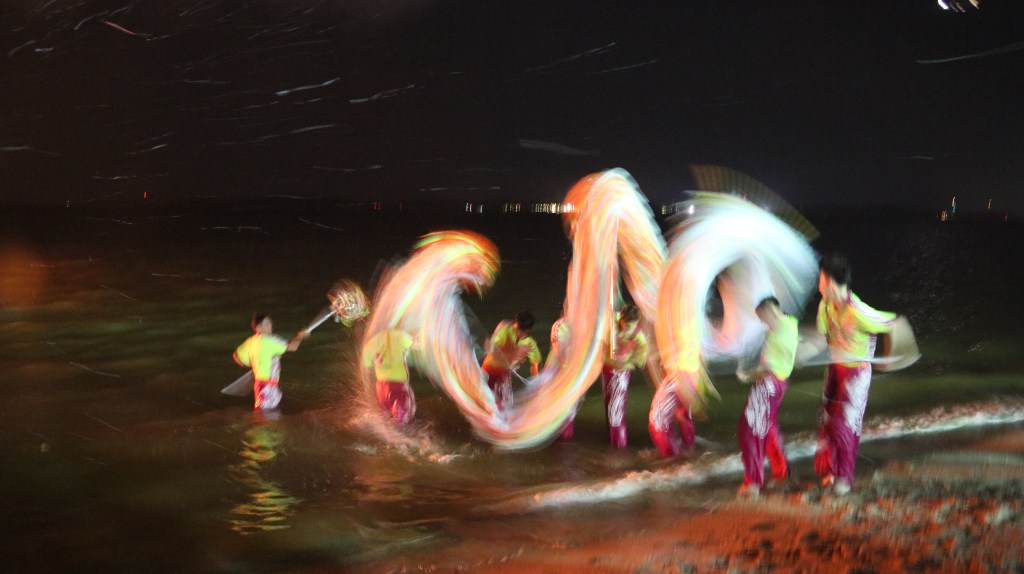
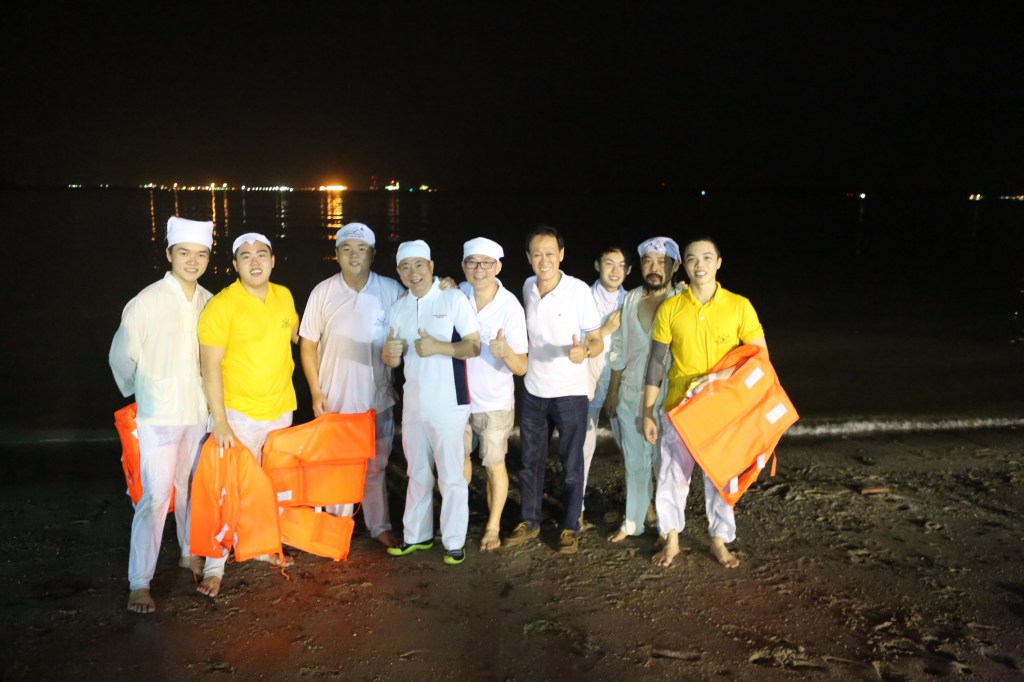
At a certain juncture, the incense sticks held by committee members and devotees are collected and placed into the censer, where they are secured with a strip of yellow cloth. The yellow cloth on the palanquins is also removed and placed in the Dragon Ship. A pile of joss paper in front of the offering area is burnt, and the Dragon Ship is pushed into the water by a group of committee members and volunteers. Similarly, the censer full of incense is carried into the water by another group of temple committee members and volunteers as the rest of the entourage watches. The dragon and lion dance troupes also enter the water and perform as the ship and censer are pushed further out to sea. Many devotees kneel with their hands together in prayer, some with their eyes closed, saying their prayers and wishes as the Nine Emperor Gods depart. The Dragon Ship is then lit and the censer is allowed to drift away from the shore.
Banquet
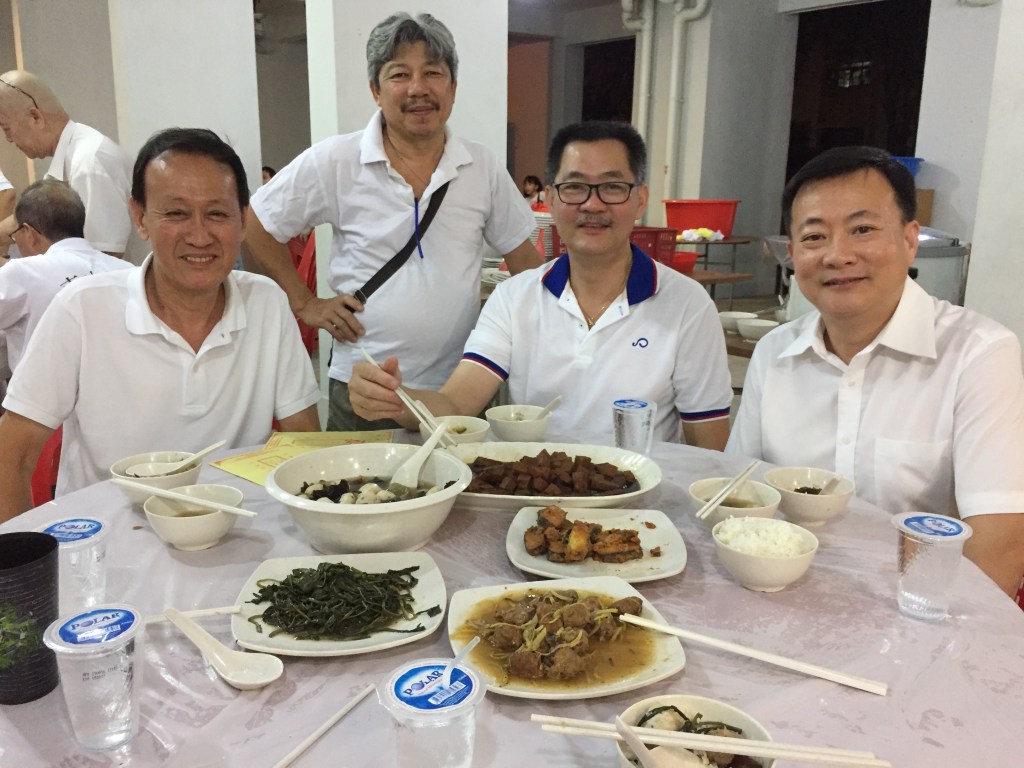
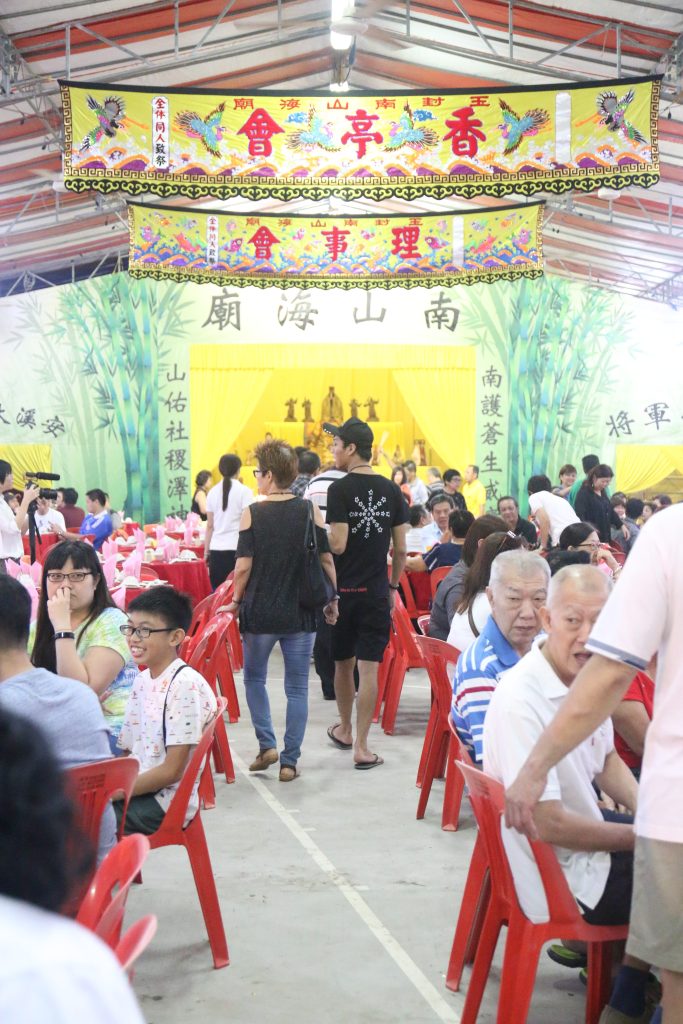
The day after the sending off of the Nine Emperor Gods, a celebratory banquet and auction is held. The Block 701 basketball court is filled with guests, including devotees and their families, friends, and colleagues.
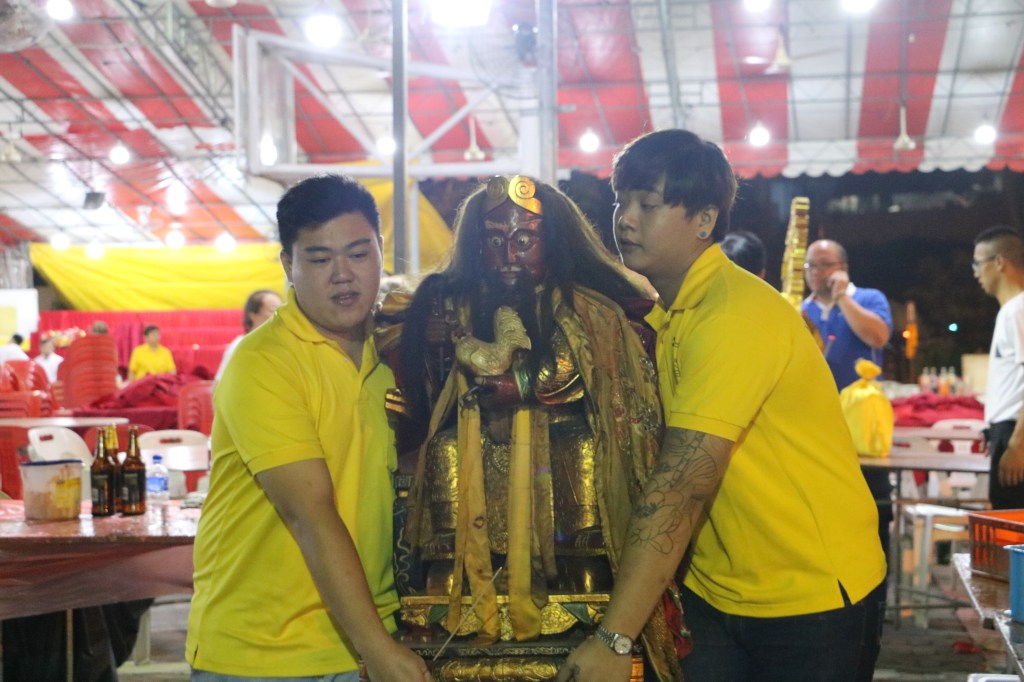
After the banquet, volunteers move the deity images, incense vessels, banners, and other equipment back to the temple, while the rest of the set-up is packed away for storage in a warehouse.
Conclusion
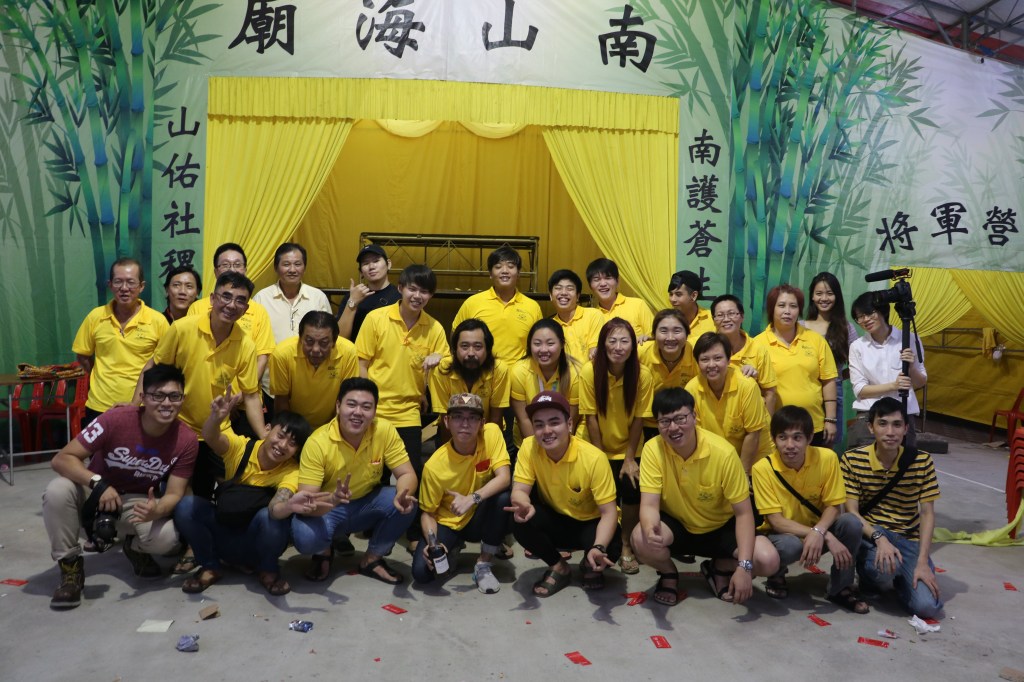
The Nine Emperor Gods Festival at Nan Shan Hai Temple is testimony to the strong ties built by the temple with its devotees, neighbours, and helpers from near and far. From a temple in a kampong, it has attracted and sustained a sizeable following today. The annual festival brings this community together through shared ritual work, collective worship, and the many forms of assistance required to sustain the celebrations. At the same time, practices established under Mr Goh continue to give the festival its distinctive character, linking the temple’s present activities to its earlier history. The continued participation of older devotees alongside younger volunteers ensures that these practices, relationships, and memories are renewed from one festival to the next.

